
Masterstudium Romanistik
Möchtest du wissenschaftlich mit zwei oder mehr romanischen Sprachen arbeiten und dein Studium selbst gestalten, z. B. über einen Auslandsaufenthalt oder ein Forschungsprojekt?
Das Masterstudium Romanistik umfasst neben einer Masterarbeit drei Teile:
- einen einzelsprachlich vertiefenden Teil in einer der drei Sprachen Französisch, Italienisch oder Spanisch,
- einen gesamtromanischen, sprachübergreifenden Teil mit umfangreichen Wahlmöglichkeiten,
- einen Wahlmodulbereich, der aus dem Master-Angebot der gesamten Universität zusammensetzbar ist. Interessant sind hier aber die Wahlfach-Programme von der Philologisch-Kulturwissenschaftlichen Fakultät.
Studieninhalte sind
- Sprachbeherrschung,
- Sprachwissenschaft,
- Literaturwissenschaft und Kulturwissenschaft.
Diese werden erweitert und vervollständigt durch die Wahlmodule.
Master of Arts
Dauer/ECTS-AP
4 Semester/120 ECTS-AP
Studienart
Vollzeit
Unterrichtssprache
Deutsch, Französisch, Italienisch, Spanisch
Voraussetzung
Bachelorabschluss/Äquivalenter Abschluss
und Sprachnachweis (Deutsch)
Fakultät
Philologisch-Kulturwissenschaftliche Fakultät
Niveau der Qualifikation
Master (2. Studienzyklus)
ISCED-11: Stufe 7, EQR/NQR: Stufe 7
ISCED-F
0231 Spracherwerb
Studienkennzahl
UC 066 849
FAQ
Die Absolvent:innen verfügen über hoch spezialisierte Kenntnisse in den Bereichen Sprach-, Literatur- und Kulturwissenschaft. Sie sind in der Lage, ihre Kompetenz in diesen Bereichen und an den Schnittstellen zu anderen philologisch-kulturwissenschaftlichen Fächern durch das wissenschaftlich korrekte Formulieren und Untermauern von Argumenten und das innovative Lösen von Problemen zu demonstrieren. Durch den relativ umfangreichen Wahlfachbereich sind sie in der Lage, das Fachwissen interdisziplinär anzuwenden.
Neben der Vermittlung eines profunden Fachwissens wird besonderer Wert auf folgende Schlüsselqualifikationen gelegt:
- kommunikative Kompetenz (schriftliche und mündliche Ausdrucksfähigkeit)
- geistige Flexibilität und Kritikfähigkeit (logisches Denken und Argumentieren, schnelles Erfassen komplexer Zusammenhänge, Entwickeln kreativer Lösungsstrategien)
- interkulturelle und kulturübergreifende Kompetenz (Umgang mit unterschiedlichsten Denktraditionen)
Die fachspezifischen Kompetenzen im Einzelnen:
- Sprachbeherrschung
Beherrschung der Fremdsprache auf Niveau C2 nach GERS, Fertigkeiten in den Bereichen Textrezeption und Textproduktion, Vertiefung der Sprachkenntnisse durch Auslandsaufenthalte (z.B. ERASMUS). - Sprachwissenschaft
wissenschaftliche Beschäftigung mit den Strukturen des Französischen / Italienischen / Spanischen; Sensibilisierung für Funktionieren der jeweiligen Sprache und die Wirkmechanismen in den unterschiedlichsten regionalen, sozialen, situativen und historischen Kontexten. - Literaturwissenschaft
kritische Auseinandersetzung mit Texten unterschiedlichster Herkunft (auch Film, Chanson); Sensibilisierung für die Wechselbeziehungen zwischen Kultur und Text). - Landes- und Kulturkunde
Sensibilisierung für die politischen, sozialen und wirtschaftlichen Aspekte des romanischen Sprachraums in ihrem jeweiligen historischen Kontext.
Gerade aufgrund der Vermittlung der genannten Kompetenzen ergibt sich für Absolvent:innen eine Vielzahl von Karrieremöglichkeiten in den unterschiedlichsten Bereichen: internationale Beziehungen, Kultur, Medienbereich, Öffentlichkeitsarbeit, Sprachmittlung, Tourismus, Verlagswesen, Verwaltung, Werbung, Wirtschaft, Wissenschaft.
Absolvent:innentracking: Zeigt, in welche Berufsfelder Studierende nach dem Studienabschluss einsteigen
Doktoratsstudien
Weitere Angebote


Philologisch-Kulturwissenschaftliche Fakultät Institut für Romanistik Prüfungsreferat Informationen für Studierende mit Behinderung
Warum Romanistik in Innsbruck studieren?
„Spaß, Freude und ganz viele tolle Bekanntschaften.“
„Besonders gut am Romanistikstudium gefällt mir, dass man nicht nur eine Matrikelnummer unter vielen ist, sondern dass das Romanistikinstitut ein sehr persönliches und familiäres ist.“
„Ich glaube, es macht so ein Romanistikstudium das Leben insgesamt einfach reicher und vielfältiger.“
Warum Romanistik studieren?
Studierende der Universität Innsbruck beschreiben, warum es sich lohnt, Romanistik in Innsbruck zu studieren.
Curriculum
Aus der Praxis

EUniverCiné in Nantes
Startschuss für das zweijährige Erasmus+-Projekt EUniverCiné, das von der Italianistik der Universität Nantes initiiert wurde und an dem neben der Innsbrucker Romanistik (Evelyn Ferrari und Sabine Schrader) und der Translationswissenschaft (Marco Agnetta) FilmwissenschaftlerInnen und ItalianistInnen der Universitäten Perugia Stranieri, Banja Luka, Genua und Roma La Sapienza beteiligt sind.
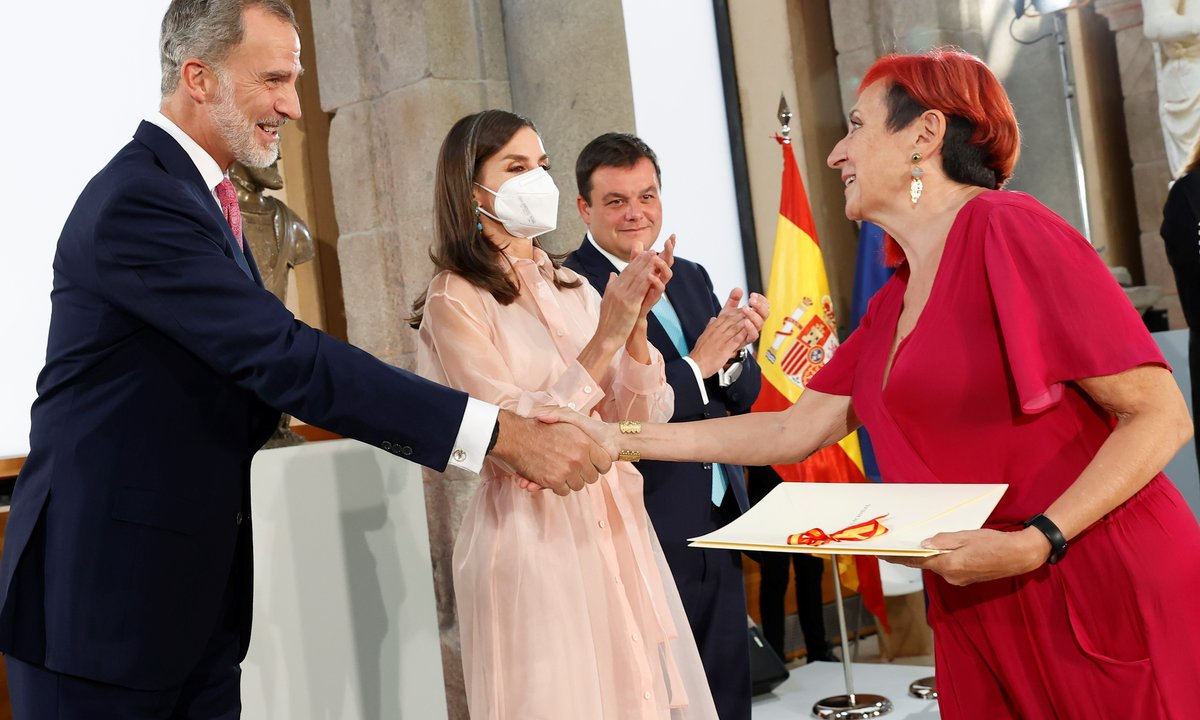
Staatspreis für Elia Eisterer-Barceló
Die Autorin und ehemalige Lehrende am Institut für Romanistik Elia Eisterer-Barceló erhielt Mitte Juli vom spanischen König Felipe VI. den mit 20.000 Euro dotierten spanischen Staatspreis für Literatur. Aufgrund der Pandemie konnte die Feier für die 29 Preisträger*innen des Premio Nacional de Cultura 2020 erst in diesem Jahr stattfinden.

Erinnern und Übersetzen
Am 10. und 11. Oktober 2019 fand in der Claudiana die internationale Tagung Translating Cultural Memory in Fiction and Testimony – Memory Studies and Translation Studies in Dialogue statt, die von Claudia Jünke (Institut für Romanistik) und Désirée Schyns (Universität Gent) organisiert wurde.

Onlinesessions
In den unterschiedlichen Onlinesessions wird das vielfältige Studienangebot der Universität Innsbruck kurzweilig vorgestellt. Die Onlinesessions sind eine gute Plattform, um schnell und unkompliziert die richtigen Antworten auf individuelle Fragen zu bekommen.
Ähnliche Studien

Anglistik und Amerikanistik (Master)
Das Masterstudium Anglistik und Amerikanistik vermittelt hohe fachliche Kompetenzen in den Bereichen English Linguistics and Culture, English Literature and Culture sowie American Literature and Culture. Im Rahmen des Wahlbereichs besteht die Möglichkeit, eine an der Fakultät angebotenen Ergänzungen zu absolvieren (z. B. Filmwissenschaft, Medienwissenschaft, Unternehmenskommunikation).

Antike Welten (Master)
Das Interfakultäre Masterstudium Antike Welten beschäftigt sich mit der Mittelmeerwelt und dem Vorderen Orient von den Anfängen der Schrift bis in die Spätantike und bietet die Möglichkeit zur fachlichen Vertiefung in den Bereichen Alte Geschichte, Altorientalistik, Gräzistik, Latinistik, Klassische Archäologie und Vorderasiatische Archäologie.

Archäologien (Master)
Archäologie beschäftigt sich mit den materiellen Hinterlassenschaften des Menschen. Die Untersuchung und wissenschaftliche Erschließung archäologischer Quellen in Form von Bodenbefunden und Funden bildet die Basis für eine objektive Rekonstruktion vergangener Realitäten.
Im Masterstudium können Schwerpunkte in einzelnen archäologischen Disziplinen gesetzt werden.

Erziehungs- und Bildungswissenschaft (Master)
Das Masterstudium Erziehungs- und Bildungswissenschaft vermittelt ein hochspezialisiertes und vertieftes Wissen über den Gegenstandsbereich der Erziehungs- und Bildungswissenschaft.
Ein Schwerpunkt kann theoretisch, methodisch und praktisch vertieft werden wie beispielsweise allgemeine Erziehungswissenschaft, Gender, Psychoanalyse, Migration u. a.

Europäische Ethnologie (Master)
Das Masterstudium vermittelt Kompetenzen für eine Kulturanalyse von Lebensstilen, Alltagspraktiken und komplexen soziokulturellen Prozessen.
Studierende lernen, die historischen Dimensionen von Gegenwartsphänomenen und -diskursen zu verstehen, populäre Identitätsentwürfe und deren mediale und insbesondere politische Instrumentalisierung zu dekonstruieren sowie wissenschaftliche Erkenntnisse für eine breite Öffentlichkeit aufzubereiten.

Gender, Kultur und Sozialer Wandel (Master)
Das interfakultäre Masterstudium Gender, Kultur und Sozialer Wandel analysiert Gender als hierarchisierende Strukturkategorie in enger Verknüpfung mit den Kategorien Ethnie und Klasse in postnationalen und -kolonialen Konstellationen. Studierende erwerben fachübergreifend wissenschaftliche und berufsorientierte Kompetenzen.

Germanistik (Master)
Das Masterstudium Germanistik vermittelt ein theoretisch und methodisch hoch spezialisiertes Wissen über Gegenstandsbereiche der Germanistik. Studierende können einen Teilbereich des Faches gezielt vertiefen. Umfassendes Fachwissen erlaubt ihnen, innovative Denk- und Forschungsansätze zu finden und zu verfolgen.

Geschichte (Master)
Das Masterstudium Geschichte vermittelt erweiternd und vertiefend Kenntnisse historischer Kategorien, Eckdaten und Zusammenhänge in ihrer zeitlichen und räumlichen Vielfalt und ihrer kontroversen Diskussion aus unterschiedlichen Forschungsperspektiven (z. B. kulturell, politisch, sozial, wirtschaftlich).