Current pollen report for Tyrol
July 10th 2026
Grass pollen season gradually declines across Tyrol – higher elevations remain the main hotspot!
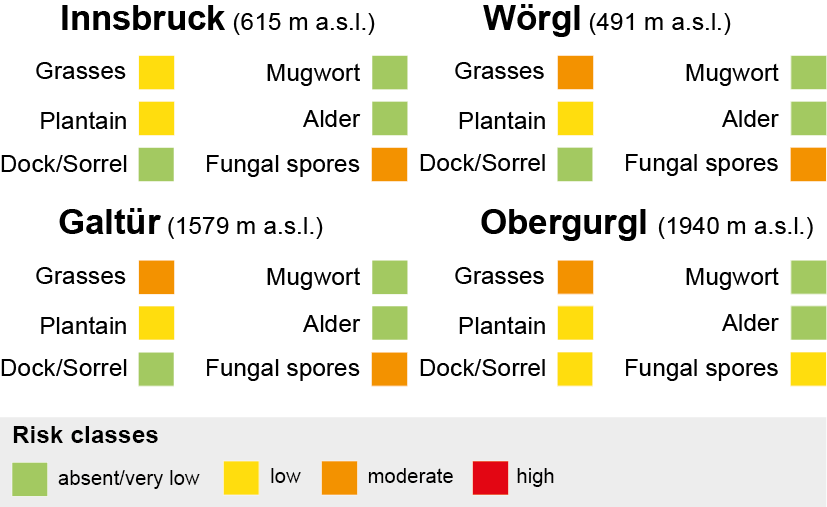
Warm and predominantly dry weather is expected to continue across Tyrol over the coming days, although occasional rain showers may still occur. While grass pollen concentrations continue to decline in the valleys and at mid elevations, allergy sufferers should remain cautious, particularly at higher elevations where the grass pollen season is still ongoing.
Grass pollen: Grass pollen remains the dominant allergenic pollen type across Tyrol. In the lower valleys, pollen concentrations continue to decline as the flowering period of many grass species comes to an end. A similar downward trend is now also observed at mid elevations (up to approximately 1,500 m), although moderate allergenic burdens may still occur locally. Above 1,500 m, however, the grass pollen season remains well established. Moderate pollen concentrations continue to be recorded, especially in meadows, pastures, and other grass-rich landscapes where pollen production remains high. Individuals planning outdoor activities in these areas should therefore continue to expect allergy symptoms. Plantain and dock/sorrel pollen are also present in the air. Although these pollen types generally occur in lower concentrations than grass pollen, they may further aggravate symptoms in sensitive individuals during the current grass pollen season.
Sweet chestnut pollen: Low concentrations of sweet chestnut pollen continue to be detected. In Tyrol, sweet chestnut occurs mainly in parks and gardens, and because it is primarily insect-pollinated, most of its pollen remains close to the flowering trees. Although it has only low allergenic significance, allergenic cross-reactivity with birch pollen has been described and may occasionally contribute to symptoms in sensitized individuals.
Other pollen types: We are also observing pollen from pine, the cypress family, lime, stinging nettle, and sedges, among others. These pollen types have only low allergenic significance.
Fungal spores: Airborne fungal spore concentrations remain moderate to high across the region. Periods of rainfall and increased humidity favour fungal growth and spore production. Individuals who are sensitive to fungal spores may experience an increase in allergy symptoms, particularly following rainy spells.
Weather, pollen levels, and practical advice: Warm and predominantly dry weather will continue to favour pollen release over the coming days, while occasional rain showers may provide only temporary relief by briefly reducing airborne pollen concentrations. The current altitudinal shift of the grass pollen season means that higher elevations have greater pollen exposure than many valley locations. Allergy sufferers should therefore consider elevation when planning outdoor activities.
Pollen reports