
Seminar of the Department of Microbiology
MSc Student Session 5
Friederike Glauch – MSc candidate – UIBK
Carmen Bendetta – MSc candidate – UIBK
16.10.2025, 11:00
- Join online
- or in presence: Seminarraum Biologie - (Technikerstr. 25, Viktor-Franz-Hess Haus, Parterre)
Abstracts
Glauch: The light of us: Photoantimicrobial activity of extracts from selected Talaromyces and Penicillium species

The global overuse of antibiotics has driven a resistance crisis, with projections of up to 40 million deaths by 2050. Alternative therapies like photodynamic antimicrobial chemotherapy (PACT), using light-activated photosensitizers (e.g., anthraquinones), are being investigated and work independently of existing resistances. Fungi from Penicillium and Talaromyces spp. show promise as sources of such compounds. This study aims to characterize fungal extracts and their biological activities using the PhotoMIC technique.
Crude extracts from T. islandicus, P. restrictum, and T. stipitatus grown on different media, and isolated photosensitizers (i.e., iridoskyrin, islandicin), which were previously identified as photoactive from cell culture experiments (Vanessa Kern, Carmen Bendetta, Angelika Seeber), were tested in this study at different concentrations for photoantimicrobial activity against Candida albicans, Escherichia coli, and Staphylococcus aureus in 96-well plates (450 nm, 30 J/cm², ~15 min).
The culture medium had a significant effect on both light- and dark-induced toxicity of the fungal extracts, which was in line with the data found in the cell culture experiments. However, the photoantimicrobial activity was dependent on the test strain: For example, T. islandicus crude extracts showed strong phototoxic activity against C. albicans and S. aureus, but not against E. coli. Interestingly, the photosensitizers iridoskyrin and islandicin isolated from apolar T. islandicus extract fractions, which had performed well in cell cultures, showed no phototoxic activity against any test organisms. This indicates the presence of a further unknown photosensitizer in the polar fractions. Phototoxicity testing of the polar fractions is ongoing, and the first results underline this assumption.
Bendetta: Solid vs. Liquid Cultures: Investigating Cultivation Strategies for Antitumor Photosensitizer Screening in Fungi of the Genera Penicillium, Talaromyces, and Hamigera
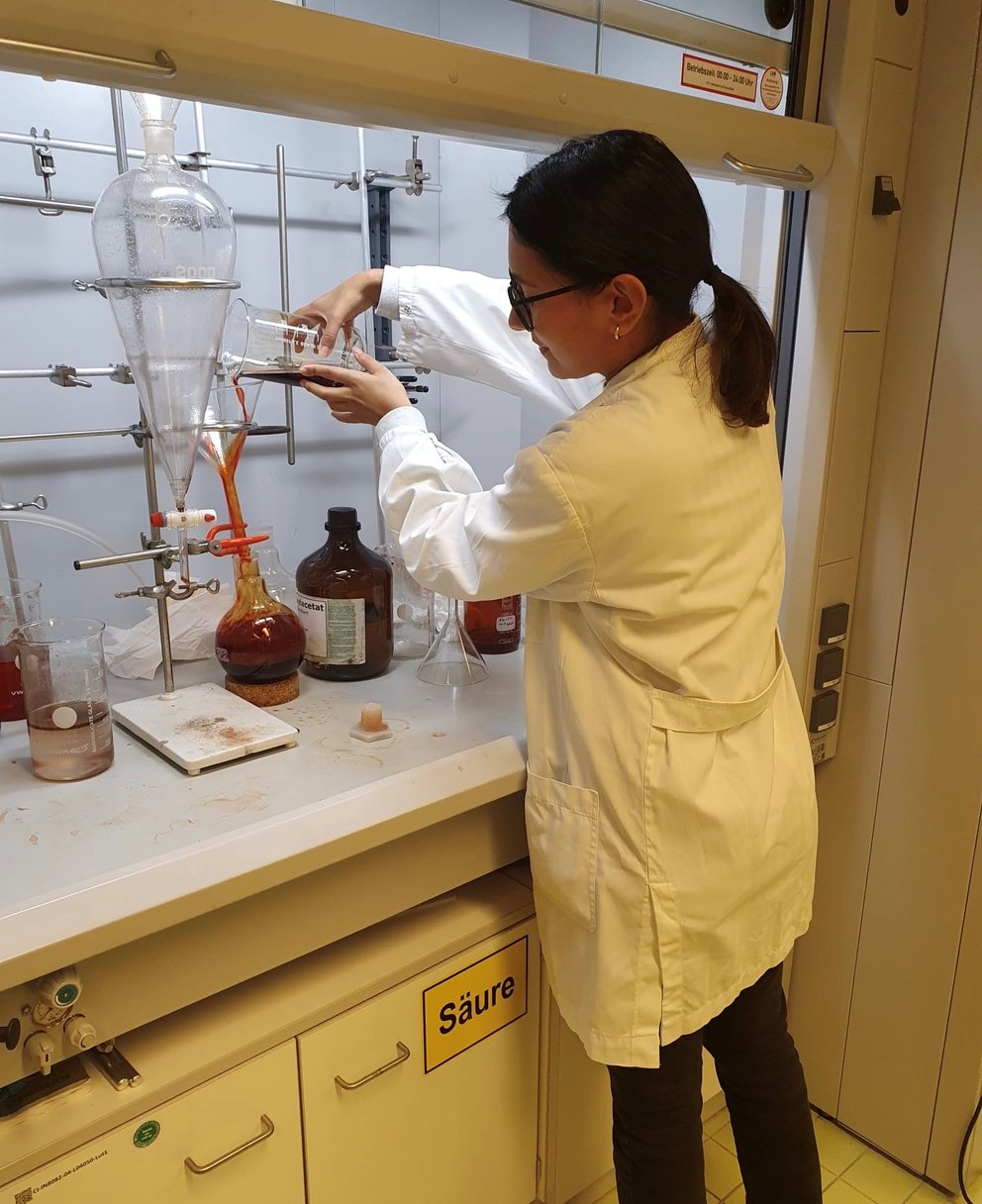
Cancer persists as one of the principal causes of mortality worldwide, emphasizing the need for more effective therapeutic strategies. However, conventional anticancer treatments are largely non-targeted, mostly invasive, and commonly associated with systemic side effects. In this context, Photodynamic Therapy (PDT) represents a promising alternative due to its more targeted approach. PDT employs photosensitizing compounds activated by light to induce targeted tumor cell death. Fungi of the genera Talaromyces, Penicillium, and Hamigera are known to produce diverse secondary metabolites. These metabolites represent a promising source of novel photosensitizers with potential applications in PDT.
The aim of this study is to investigate the potential of the selected fungal species from the genera Penicillium, Talaromyces, and Hamigera to produce antitumoral photosensitizers. Submerged cultures were assessed as an alternative to agar plate cultivation for screening purposes. Furthermore, photocytotoxicity assays were employed to determine photosensitizer activity in four cancer cell lines, in parallel with an evaluation of how the cultivation method modulates the metabolite profile and screening efficiency.
Out of the five selected strains, T. islandicus and P. restrictum produced photosensitizing compounds. The crude extracts derived from both agar plate cultivation and submerged cultivation exhibited strong photocytotoxic activity. However, agar plate cultivation was found to be more suitable for screening purposes than submerged cultivation, providing higher extract yields and more reliable induction of photosensitizer production. The strongest activity was observed in the extracts of P. restrictum cultivated on agar plates with YES medium, with an EC50 of 0.43 µg/ml, and in the extract of T. islandicus cultivated on agar plates with YES medium, with an EC50 of 0.45 µg/ml.