
Projekte
The function of peroxisomes in Trichoderma atroviride
PI: Mario Gründlinger
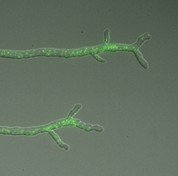
Peroxisomes, formerly known as “microbodies”, are dynamic cell organelles that perform a number of important metabolic and cellular functions. They have a single enclosing membrane and contain a dense, often granular matrix that harbors numerous enzymes. Peroxisomes owe their name to their central function in the metabolism of peroxides, in particular hydrogen peroxide, which is broken down by peroxisomal enzymes such as catalase. The size of peroxisomes typically varies between 0.1 and 1.0 micrometers in diameter.
In addition to the metabolism of reactive oxygen species (ROS), the β-oxidation of fatty acids and the glyoxylate cycle are among the classical functions of peroxisomes in filamentous fungi and yeasts. In addition to these classical functions, recent studies show other important, but also very specialized tasks, such as the biosynthesis of secondary metabolites, including mycotoxins and antibiotics (e.g. penicillin). Furthermore, peroxisomes are essential for the virulence of plant pathogenic fungi.
Trichoderma atroviride is a filamentous fungus best known for its role as a mycoparasite and as a useful organism in biological plant protection. The study of its peroxisomes is a current area of research that may provide new insights into the cellular and molecular mechanisms of its antagonistic abilities and the contribution of peroxisomes to secondary metabolism.