FlowerPower 2.0
Evaluation of a Citizen Science eDNA-Approach to monitor Insect-Flower Interactions

Flower Power 2.0
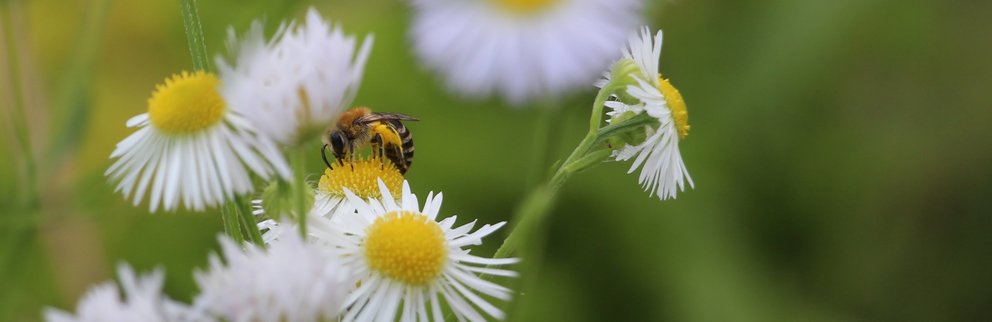
Insect populations experience a dramatic decline in recent decades, with an extinction rate nearly eight times higher than that of mammals and birds. Nearly 80% of flowers worldwide depend on pollination by insects. They are attracted to flowers due to the supply of nectar and pollen, serving as a food source. Insects are central in most ecosystems including In Austria, four out of five animal species are insects, and among the estimated 40’000 Austrian insect species, at least one-third strongly relies on flowers either as juveniles and/or adults.
Apart from pollinating flowers insects act as decomposers promoting soil health, as well as predators or parasitoids that naturally control arable pests. A high insect diversity is therefore particularly important in terms of the resilience of their ecosystem services to climate change.
Due to the large area covered, the composition of agricultural areas is highly relevant for the preservation of insect biodiversity. One way to promote insects is to create flower strips, which are being introduced throughout Austrian agricultural areas. Nowadays, various types of flower strips are being established, with species compositions specific to local conditions aiming in a more sustainable plant cover and attractivity for insects.
However, an evaluation of existing flower strips in terms of their promotion of insect diversity is still pending – among other things, due to methodological limitations, as insects are difficult to identify and observe. This makes it very time-consuming to comprehensively evaluate flower strips.
DNA methods make it possible to involve farmers and the general public in surveys using citizen science, enabling the participation of important stakeholders and Austria-wide data collection within a short time frame. By detecting the DNA-traces left by insects on plants, we can track visitor diversity in agricultural landscapes without the necessity to catch them. In doing so we can examine many different flower strips in parallel - this is only possible with the assessment of species via environmental DNA (eDNA) in combination with citizen science. In doing this, we are opening up new opportunities for direct comparison of different types of flower mixtures under a variety of structural, landscape and cultivation conditions.
Project Aims:
1. Measurement of functional plant and insect biodiversity in flower strips by farmers and citizens as a basis for optimised flower strip species composition and management
2. Evaluation of biodiverse flower strips and development of optimised seed mixtures that promote the greatest possible insect diversity and thus ensure ecosystem services for agriculture
3. Raising awareness of the importance of flower strips for promoting insect biodiversity for site-adapted and resilient agriculture and networking stakeholders within and outside agriculture
Future project ideas are about to extend this approach from farmers to beekeepers, agricultural organizations and other stakeholders to conduct independent sampling campaigns in agroecosystems across Austria.
For more information, videos and updates on the project visit our project webpage: https://www.uibk.ac.at/de/zoology/forschung/applied-animal-ecology/projects/flowerpower2/
AAE members involved in the project: Michael Traugott (PI),Corinna Wallinger, Oskar Ragnar Rennstam Rubbmark, Georg Teischinger, Marjana Ljubisavljevic, Sabrina Gurten
Farmers as “Citizen Scientists”
Farmers are involved in this project as "Citizen Scientists". Using the citizen science approach, this new monitoring tool will be tested and optimized in order to assess the method's potential for implementation in a nationwide pollinator monitoring program in Austria. Such a standardized and non-invasive tool could make a significant contribution to closing data gaps on the distribution of different insect groups in Austria and to monitoring the effectiveness of management strategies to promote pollinators and other flower-visiting insects.
Pilot Study (2023/2024)
The focus of this pilot study is on testing the methodology of using eDNA as a sampling tool in selected flower strips. A future project aims to extend the approach from farmers to beekeepers, agricultural organizations and other stakeholders to conduct independent sampling campaigns across Austria.
AAE members involved in the project: Michael Traugott (PI), Oskar Ragnar Rennstam Rubbmark, Sabrina Gurten
Funding: The project is financed by the Federal Ministry of Agriculture, Regions and Tourism and the Federal Ministry for Climate Action, Environment, Energy, Mobility, Innovation and Technology.