
Master’s Programme Zoology
Are you interested in regeneration and stem cells, would you like to explore physiological relationships or understand how life functions at the organismic and cellular level?
The students of the Master’s Degree Programme in Zoology study zoological relationships and learn integrative and critical thinking in the field of science and the animate world.
The focus is put on understanding life from the organism to the molecular level as well as structure-function relationships. Technically the students focus on modern light and electron microscopy. Students may specialise in the fields of evolution, developmental biology, physiology, chonobiology, environmental stress and bionics.
Master of Science
Duration/ECTS-Credits
4 semesters/120 ECTS-Credits
Mode of Study
Full-time
Language
German
Requirements
Relevant bachelor's degree/equivalent
and Language Certificates
Faculty
Faculty of Biology
Level of qualification
Master (Second Cycle)
ISCED-11: Level 7, EQF/NQF: Level 7
ISCED-F
0511 Biology
Study Code
UC 066 831
FAQ
Graduates possess highly specialized knowledge in the fields of organismic zoology, evolution and developmental biology, the physiology of animals, and ecophysiology and population biology. They are able to demonstrate their abilities at the intersections of these fields through their capacity to formulate and susbtantiate arguments scientifically and to find innovative solutions to problems.
The goal of the Master's Programme Zoology at the University of Innsbruck is to train students in modern methods of zoological research and their application in the research areas offered at the faculty.
Key areas include the development and cell physiology of animals as well as their relationship to the environment, and ecotoxicology and population biology. The evolution of animals is treated in interdisciplinary fashion. Wildlife studies are conducted using various on-site model organisms from current research and using field studies.
In general terms, the programme stresses the acquisition of an understanding of biological connections, independent and integrative thinking and flexibility. A central part of the programme is instruction in independent scientific work and in publishing scientific data. The master's programme also prepares students for doctoral studies.
Career oppoortunities may include: scientific activities in companies, scientific activities in public and administrative institutions, basic research in biomedicine, zoologically-oriented research and teaching in all areas of biology, activities as a certified expert, further activities related to other disciplines (e.g. journalism) in combination with additional qualifications.
Graduates tracking: Shows which occupational fields students enter after graduation


Faculty of Biology Examination Office Information for students with disabilities
Curriculum
From the field

Cancer cells ‘power up’ when pressed to the limit
Cancer cells mount an instant, energy‑rich response to being physically squeezed, according to a study published by a team around Verena Ruprecht and Sara Sdelci in the journal Nature Communications. The surge of energy is the first reported instance of a defensive mechanism which helps the cells repair DNA damage and survive the crowded environments of the human body.
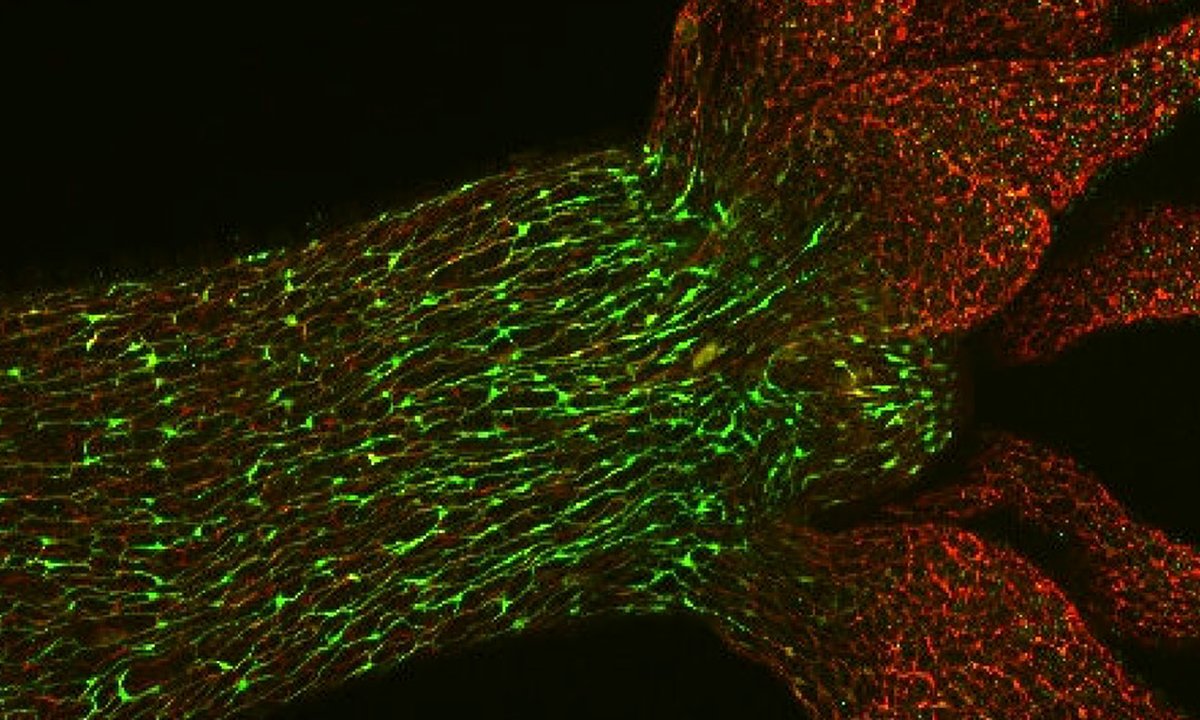
Nerve cells in colour
A novel antibody colors all nerve cells in the model organism Hydra: Scientists were able to observe astonishing details of neuronal stimulus transmission in the nerve network of the freshwater polyp. Bert Hobmayer and his team from the Institute of Zoology contributed to the recently published findings, which are relevant for neurobiology and developmental biology.

Student Advisory Service
We are the first point of contact for all questions about studying for pupils, prospective students and students as well as parents and teachers.
Related studies

Atmospheric Sciences (Master)
Students of the Master’s Degree Programme in Atmospheric Sciences study, model and observe the Earth’s atmosphere and its interactions with hydrosphere, biosphere, cryosphere and human activities.
In courses, labs and field work, students acquire a highly interdisciplinary set of tools and skills from the fields of physics, computer sciences, chemistry, mathematics, statistics and data science and measurement technologies.
Graduates are experts in atmospheric processes taking place over mountainous terrain.

Biomedical Life Sciences (Master)
The Master's programme in Biomedical Life Sciences provides you with an in-depth understanding of cellular and molecular processes in health and disease – from bioinformatics and stem cell biology to immunology.
You will learn cutting-edge techniques such as single-cell analysis, 3D cell cultures, live cell imaging, and computer-based modeling, and apply them in hands-on lab courses in small groups and in individual research projects.

Botany (Master)
In the Master’s Degree Programme in Botany the students gain extensive knowledge about the biology of plants from the molecular to the ecosystem level.
Students may specialise in biochemistry and cell biology, stress physiology and ecophysiology, evolutionary systematics, biodiversity and population biology, palynology and archeobotany, agricultural and forest ecology, climate change and environmental protection.

Chemistry (Master)
Graduates of the Master’s Degree Program in Chemistry qualify for working in managing positions as a chemist in research, technology, industry and relevant fields in public institutions.
This programme is a pre-requisite to enrol in the PhD Programme in Chemistry.

Chemical Engineering (Master)
The Master’s Degree Programme in Chemical Engineering is the basis for working as a chemical engineer in research, industry, technological and environmental positions as well as other related fields in the public sphere. This program is a pre-requisite for enrolment into the PhD Programme in Chemistry or Pharmaceutical Sciences.

Environmental Management of Mountain Areas (EMMA) (Master)
This interdisciplinary and international programme is offered in cooperation with the Faculty of Science and Technology of the Free University of Bozen-Bolzano, Italy. The focus in this programme is to provide subject related topics including Alpine ecology, landscape ecology and planning, agriculture and forestry, wastewater and waste treatment, geoinformatics and environmental and resource management.


Geography: Global Change – Regional Sustainability (Master)
Building on a relevant Bachelor’s degree the students of this Master’s Degree Programme further develop integrated and network thinking skills at the intersections of society and environment.
Students may choose a focus from four main topics: urban and regional development, development studies, natural hazard research and mountain research. Students also learn a variety of methodologies from the fields of social sciences, geoinformatics, remote sensing as well as terrain and laboratory methodologies.