Die Polizei im Reichsgau Tirol und Vorarlberg
The police in the Reichsgau Tyrol and Vorarlberg
Research project | Duration: October 2024–September 2028
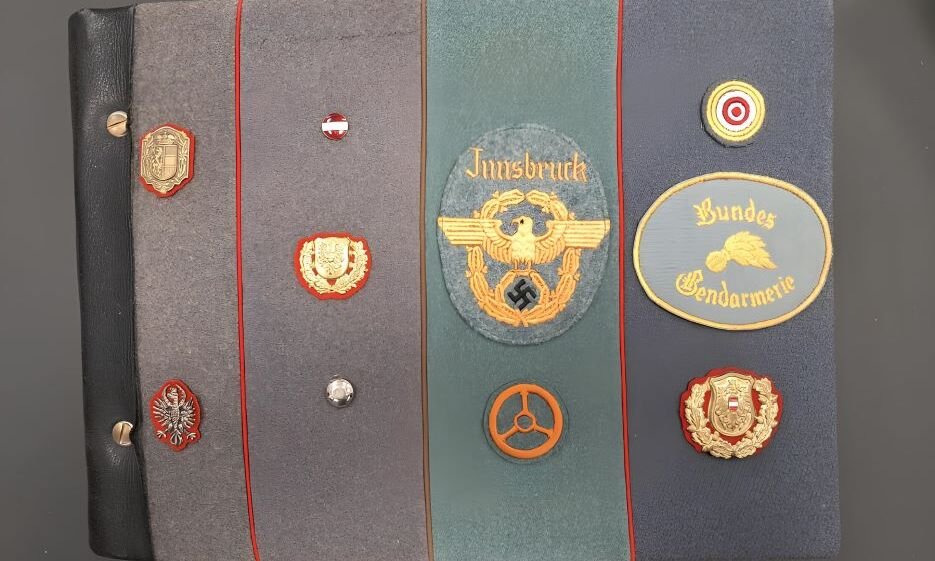
The research project examines the activities of the police in the Reichsgau of Tyrol and Vorarlberg between 1938 and 1945 as well as the political and legal handling of police crimes and personnel after 1945, i.e. the denazification of the police authorities and the reappraisal of participation in Nazi violent crimes. The interest in knowledge extends on the one hand to the functions of security and order police departments in the implementation of socio-political concepts of order of the Nazi regime ("German Volksgemeinschaft") internally and externally and, on the other hand, to the participation of police officers and gendarmes from the Reichsgau of Tyrol and Vorarlberg in the enforcement of occupation rule in the context of German warfare and power expansion in various theaters in Europe.
Methodologically, in addition to the structural reconstruction and power-political positioning of police apparatuses and offices in the Reichsgau of Tyrol and Vorarlberg, the main focus is on an actor-centered analysis of police personnel and concrete actions towards third parties in different contexts of police work. This approach is intended to explore the entire range of actions of police officers and gendarmes in the Reichsgau of Tyrol and Vorarlberg as well as in the Reichsgau of Tyrol and Vorarlberg: from participation in the Shoah and occupation crimes in the context of population policy and the fight against resistance, to the repression of political opposition, to social exclusion and racist exploitation, to ambivalent behaviour between conformism and non-conformism in the different contexts of action up to resistant action and participation in the liberation from National Socialism. Against the background of the rebuilding of the executive after 1945, it is also a matter of analysing how police action in a post-1945 dictatorship was assessed in a democratic state governed by the rule of law. Among other things, this shows how strong the demarcation vis-à-vis the Nazi state was in the police institutions of the Second Republic and what significance it played in the formation of the self-image of the executive. An important source for the project is the newly developed Historical Archive of the Tyrolean State Police Directorate.
Project management: Priv.-Doz. Mag. Dr. Peter Pirker
Project staff: Sarah-Maria Feuerstein, Alexander Obertimpfler
Case studies: Mag. Isabella Greber, Mag. Dr. Sabine Pitscheider
Contact:
Priv.-Doz. Mag. Dr. Peter Pirker
Institute of Contemporary History
University of Innsbruck
Innrain 52d, 6020 Innsbruck