
Research Themes across Time

The Innsbruck Monte Iato Project approaches the site not as a sequence of isolated historical phases, but as a long-term laboratory for understanding how upland societies organise themselves within changing ecological, political and cultural environments. Three key themes structure our research across time — from prehistory to the Middle Ages: ecology and connectivity, power and resilience, and consumption and values.
Sicily is characterised by pronounced ecological fragmentation: open maritime lowlands contrast with cooler, more self-sufficient mountain regions. Coastal zones were integrated early into expanding Mediterranean exchange systems, while inland uplands maintained agro-pastoral, extended-family structures. Yet these zones were never isolated. Since the Neolithic, river valleys, mobility corridors and social ties have linked diverse micro-ecologies into complementary systems of production and exchange (Kistler forthcoming).
Monte Iato occupied a strategic position within this ecological interface between coast and interior. In the sixth and fifth centuries BCE, it functioned as a contact zone between urbanising coastal societies and segmentary inland communities. Monumental architecture, imported ceramics and new consumption practices signal intensifying Mediterranean connectivity, while the sanctuary centred on the Aphrodite Temple anchored local identity within these expanding spheres of interactions (Öhlinger et al. 2019).
In the third century BCE, as western Sicily became a geopolitical buffer between Carthage and Rome, connectivity assumed new institutional forms. The transformation from the koinon of the Iaitines into the polis of Iaitas formalised participation in inter-polis diplomacy and exchange. Public infrastructure — including the agora, theatre and storage facilities — integrated ecological surplus into political negotiation (Kistler, Mohr, Dauth and Guirard in press). Archaeobotanical evidence indicates deliberate diversification towards more easily storable crops, suggesting that resilience was built not through isolation but through managed interdependence (Kistler, Armbrüster, Forstenpointner and Thanheiser forthcoming).
Across two millennia, Monte Iato demonstrates that fragmentation was not a weakness. When balanced by connectivity, ecological diversity became a resource for stability and negotiation within shifting Mediterranean systems.
Resilience at Monte Iato was not merely a response to shifting Mediterranean power systems — from early colonial connectivity to imperial integration and medieval coercion — but the product of a deeply rooted social structure. For centuries, the community was organised around segmentary extended-family households that controlled land, livestock and agricultural production. These households formed a flexible mosaic: relatively autonomous units capable of building coalitions in times of crisis while sustaining everyday subsistence independently (Kistler forthcoming).
This structural plurality limited the depth of external penetration. From the arrival of Phoenician and Greek coastal urban networks to Roman provincial administration and later medieval regimes, external powers reshaped institutions and political frameworks. Yet they did not dissolve the underlying household-based economic order. When Monte Iato became a Hellenistic polis, public institutions such as the agora and bouleuterion coordinated surplus and civic life, but household autonomy endured. Likewise, Roman reorganisation around 100 BCE transformed the urban surface — introducing Roman civic architecture and Latin administration — without dismantling the segmentary economic base (Kistler, Mohr, and Armbrüster; Mohr, Tanner, Guirard, and Kistler, forthcoming).
Even in the thirteenth century CE, amid siege and destruction, archaeological evidence reveals differentiated household economies operating side by side (Mölk 2021; Wimmer 2025).
Across the longue durée, regimes shifted, alliances reconfigured and monuments were rebuilt, yet the mosaic-like subsistence strategy persisted. Interventions — whether connective, hegemonic or coercive — could reorganise public space and political authority, but they rarely penetrated the structural depth of local society.
At Monte Iato, resilience was systemic: embedded in a diversified, segmentary social fabric capable of absorbing, adapting to and ultimately outlasting successive Mediterranean hegemonies.
At Monte Iato, consumption was a primary medium through which locality was produced. Ceramics, food remains, architecture and spatial arrangements do not merely reflect economic exchange — they materialise value regimes. Consumption practices dynamically balanced cosmopolitan, traditional and regional orientations (Kistler 2023). The local was not static; it was dynamically constructed through the selective appropriation and reinterpretation of Mediterranean forms, intersecting them with local traditions to generate shared regional identities (Kistler, Öhlinger, and Mohr 2026).
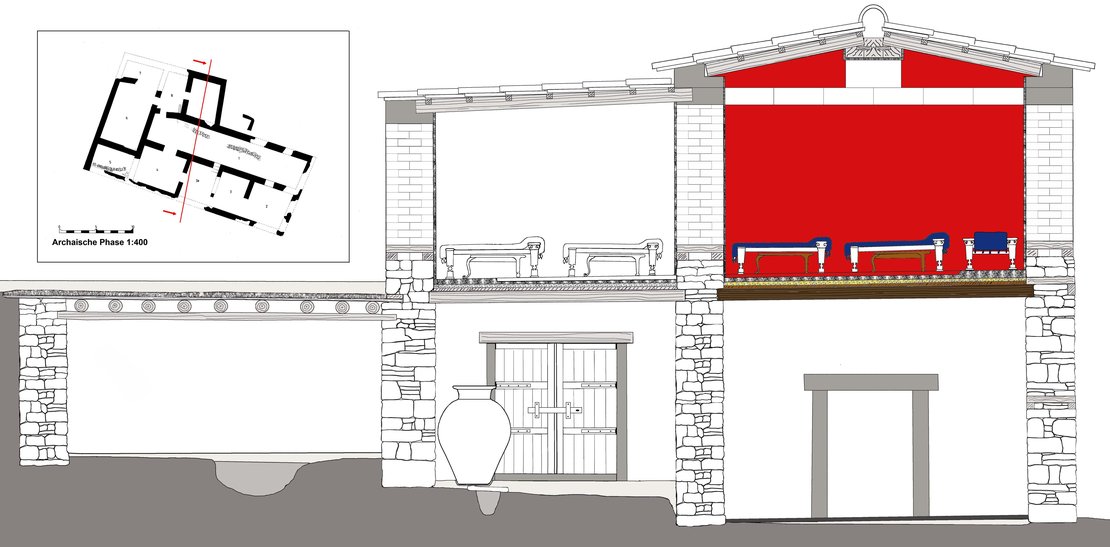
In the Archaic period, three value regimes coexisted. Cultic contexts associated with distinctive deer veneration emphasised archaic and locally rooted practices and material culture, reinforcing ancestral belonging. Domestic assemblages combined regional painted wares with selected Greek imports — especially in drinking contexts — balancing cosmopolitan openness with traditionalist orientations. Elite households, in turn, cultivated cosmopolitan distinction through high-prestige Greek ceramics, architecturally ambitious building programmes, and sophisticated culinary practices (Öhlinger et al. 2021; Kistler, Forstenpointner, and Thanheiser 2026)


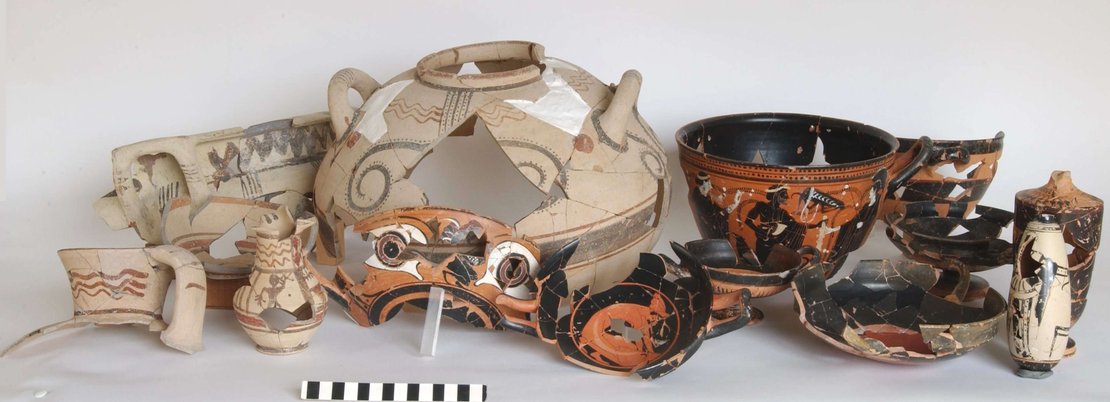
In the Hellenistic period, these dynamics intensified. The adoption of black-gloss pottery, transport amphorae and specialised kitchenware signalled participation in wider Mediterranean interaction (Dauth forthcoming) (Fig. ). At the same time, monochrome wares, handmade cooking pots and archaic forms sustained regional ‘we-ness’.
Consumption profiles thus reveal not passive Hellenisation but active localisation of Hellenisation. Cosmopolitan forms were refunctionalised within local political and social strategies — whether in moments of elite display, ritual closure or everyday domestic life.
Across centuries, shifts in political power did not homogenise consumption. Instead, the assemblages display recurring tensions and balances between wider entanglement and regional resilience. Even in medieval contexts, differentiated household consumption patterns demonstrate the persistence of mosaic-like value regimes (Wimmer 2025).
Monte Iato thus illustrates that consumption was never secondary to political history. It constituted a central arena in which identities were negotiated, power relations performed and locality continuously produced within wider Mediterranean worlds.
Monte Iato as a Long-Term Laboratory
Together, the three key themes — Ecology and Connectivity, Power and Resilience, and Consumption and Values — frame Monte Iato as a diachronic research laboratory. Here, landscape, social organisation and cultural practice intersect. Ecological fragmentation fosters connectivity. Segmentary households generate political adaptability. Consumption materialises values and identity.
Monte Iato demonstrates that long-term stability in the ancient Mediterranean was not the absence of change, but the capacity to reorganise structures, resources and meanings across shifting historical horizons.