
Monte Iato through Time
Rising above the Belice Valley on a limestone plateau, Monte Iato is one of the longest continuously inhabited sites in western Sicily. For over two millennia (c. 700 BCE–1300 CE), its strategic position, natural defences, and access to a resource-rich upland landscape made it an enduring place of settlement. Across centuries of cultural exchange, political transformation, and conflict, Monte Iato was repeatedly reshaped—yet it sustained a remarkable degree of local resilience.


From Classical Transition to Hellenistic Polis
430 - 100 BCE
In the aftermath of the mid-fifth-century BCE de-monumentalisation, Monte Iato entered a phase characterised by only sporadic visitation (Preliminary excavation results 2023). By the later fourth century BCE, however, renewed activity on the hill marked another significant turning point.

Wall remains and settlement layers of the late 4th and 3rd centuries BCE, scattered over the Monte Iato plateau: ① to the west of the peristyle house 2, 330–250 BCE (see below); ② in the area of the Late Archaic House, 270–200 BCE (see below); ③ in the area of the Peristyle House 1, 330–250 BCE, under rooms 6, 8, 9, and 10; ④ to the north-east of Peristyle House 1, 330-250/200 BCE; ⑤ in the area of the later Hellenistic-Roman agora, 330/300–250/30 BCE: a) reuse of the Late Archaic House II, b) wall and floor remains under the ‘Podium Temple’, c) a wall remnant under the porch of the ‘4th–century building’as well as d) the dismantled dwellings in the northern part of the agora; ⑥ in the area of sondage EQ 1600 (see below); ⑦ under the Peristyle House E1 in the later eastern quarter of Iaitas; ⑧ Sondage WQ 420. Copyright Züricher Ietas Excavation

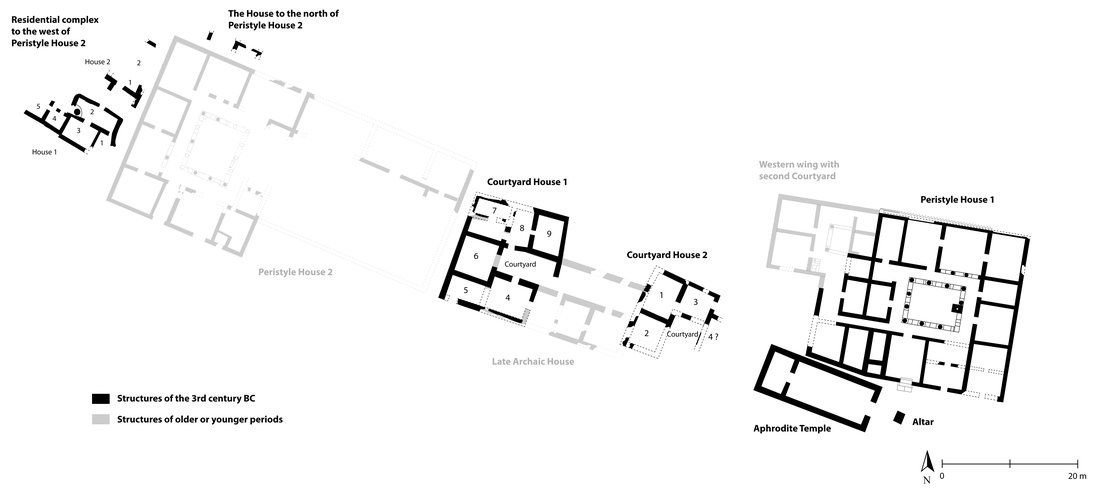
Building with and upon the walls of their Archaic predecessors, the inhabitants of the upper Belice and Iato valleys re-established residential structures on the mountain. Somewhat later, the former Late Archaic House was remodelled into a courtyard house, indicating stabilised reoccupation and a reorganisation of domestic and communal space.
Monte Iato thus once again became a permanent hilltop settlement (Kistler, Mohr, and Armbrüster 2026; Armbrüster forthcoming).
At this time, situated between Syracuse, Carthage and Rome, Iaitas occupied a strategic position within a contested geopolitical landscape. Rather than a marginal outpost, the city actively negotiated shifting alliances and external pressures within wider Mediterranean power dynamics.
In the second half of the third century BCE, a theatre, an agora and surrounding stoai were constructed at the summit, forming a structured civic centre in accordance with the urban model of Hellenistic poleis.

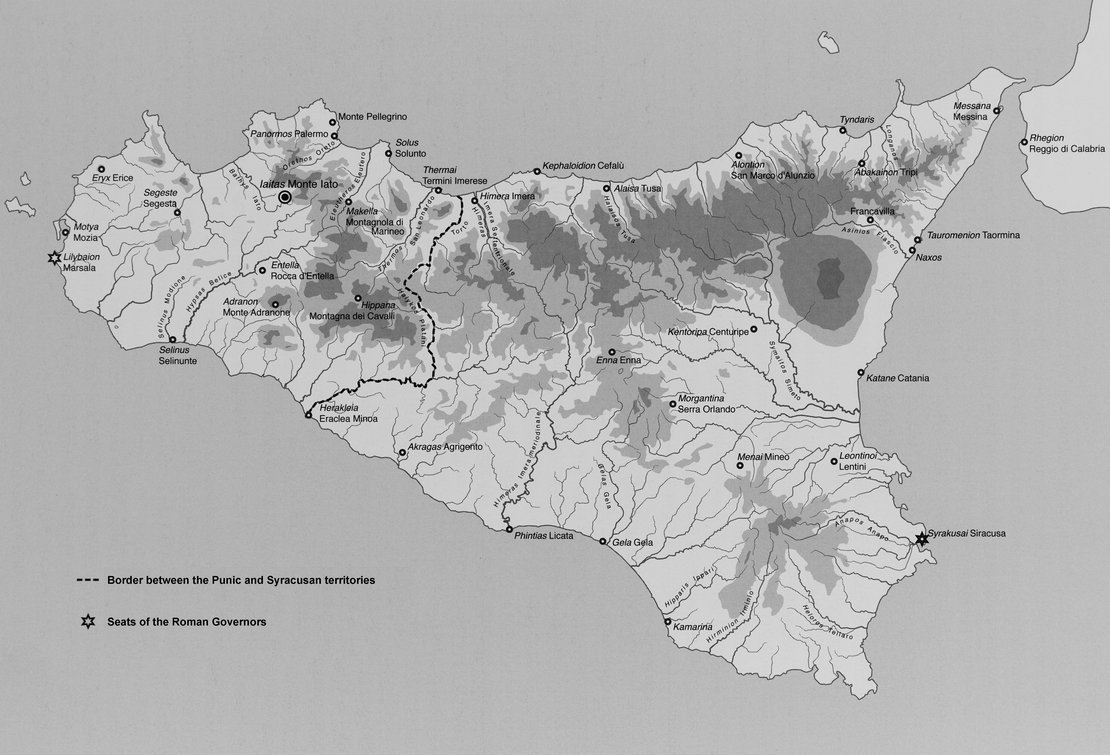

Adjacent residential quarters included substantial houses, among them large peristyle houses that reflect evolving forms of social organisation and elite representation (Kistler, Mohr, and Armbrüster 2026; Armbrüster forthcoming) (3D-Model Peristyle House 1) . Coinage and stamped roof tiles attest to the city’s name, IAITAS (Fig. 10).
From reoccupation to civic urbanism. Monte Iato re-emerged as the Hellenistic polis of Iaitas, redefining civic space and political presence between Syracuse, Carthage and Rome.