
Monte Iato through Time
Rising above the Belice Valley on a limestone plateau, Monte Iato is one of the longest continuously inhabited sites in western Sicily. For over two millennia (c. 700 BCE–1300 CE), its strategic position, natural defences, and access to a resource-rich upland landscape made it an enduring place of settlement. Across centuries of cultural exchange, political transformation, and conflict, Monte Iato was repeatedly reshaped—yet it sustained a remarkable degree of local resilience.


Origins and Archaic Transformation
700 - 460/30 BCE

Settlement began in the early first millennium BCE, as indicated by early ceramic finds.
By the seventh and especially the sixth century BCE, activity had intensified: clusters of dwellings formed small hamlets across the plateau.
These communities were not isolated; their inhabitants maintained active and hospitable contacts with Phoenician and Greek partners, engaging in exchange while preserving local traditions.

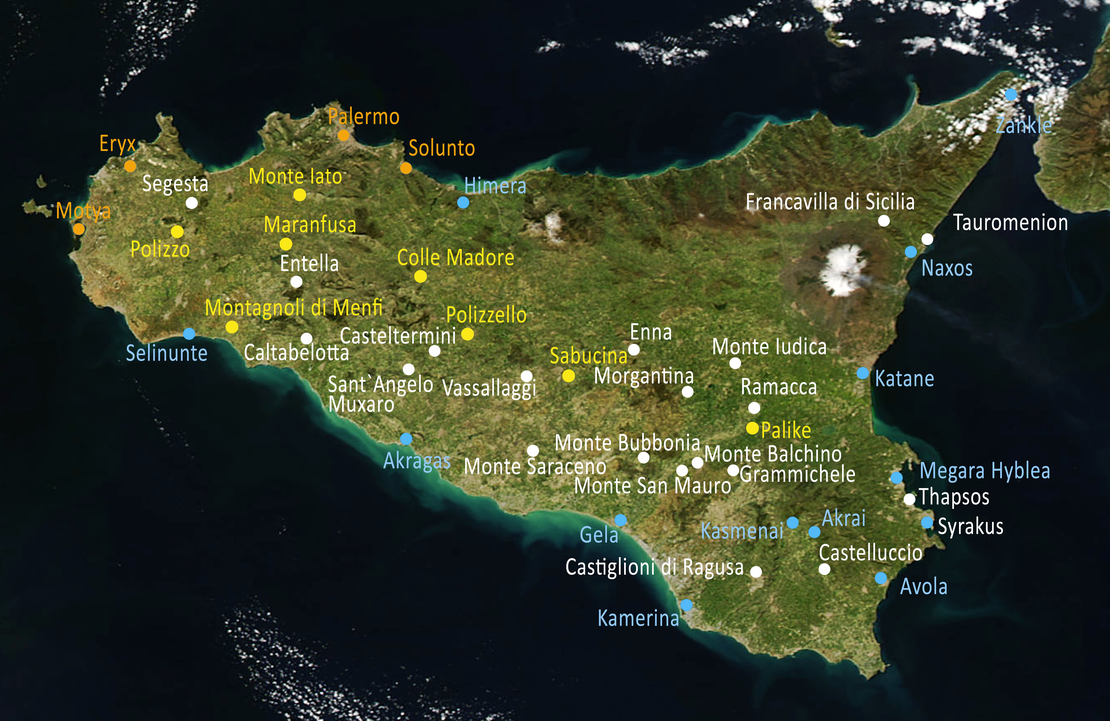

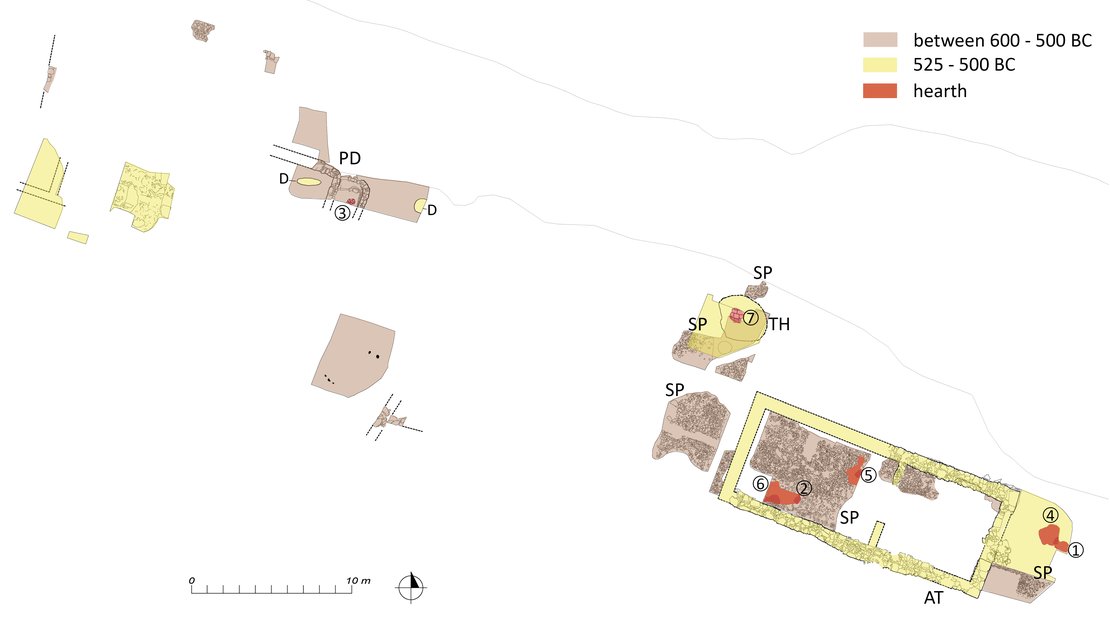
During the first half of the sixth century BCE, Monte Iato developed into a regional inland centre. A decisive transformation occurred in the third quarter of the sixth century BCE with the construction of the so-called Aphrodite Temple, an exceptional cult building in the Sicilian interior (Fig. 4). Together with additional cult structures established nearby in the later sixth and early fifth centuries BCE, it formed part of a large, carefully planned sacred landscape (Fig. 5) (Öhlinger et al. 2021; Dauth et al. 2023; Kistler, Öhlinger and Mohr 2026).

Around 460/450 BCE, the Late Archaic House and its annex were deliberately and ritually destroyed, likely in connection with the abandonment of the Aphrodite Temple. This marked a process of de-monumentalisation in which colonial hierarchies were dismantled and segmentary identities reaffirmed (Kistler 2020; 2022). Soon afterwards, a more modest structure was erected immediately to the east of the Late Archaic House, reusing parts of its walls. After only one or two decades, it too was intentionally and ritually abandoned. Rather than serving as a private residence, the building functioned as a communal meeting and feasting space within a changing social order. Its brief lifespan reflects a transitional phase marked by economic contraction, declining ceramic imports and the dissolution of colonial networks, culminating in the abandonment of the hilltop settlement in the later fifth century BCE (Kistler 2024)
