TRUTH, TRUST, AND DEMOCRACY | Lecture Series

Organizers: Christoph Jäger und Michaela Quast-Neulinger

In recent years populism, propaganda, manipulation, and authoritarian thinking have started to jeopardize liberal democracy and the open societies. Rational, enlightened thinking appears to be in decline. This lecture series analyzes these developments and explores explanations and strategies for addressing them. Leading scholars from various disciplines in philosophy and other fields in the humanities and social sciences, will offer up-to-date discussion and analysis. The series will feature several lectures each semester, often accompanied by workshops on specific topics.

Populismus, Propaganda, Manipulation und autoritäres Denken gefährden zusehends die Prinzipien und Errungenschaften liberaler Demokratie und der offenen Gesellschaft. Rationales, aufgeklärtes Denken steht unter Druck. Die Vortragsreihe analysiert diese Entwicklungen und untersucht Erklärungsansätze und Strategien zu ihrer Bewältigung. Führende Wissenschaftlerinnen und Wissenschaftler aus verschiedenen Disziplinen der Philosophie und anderen Geistes- und Sozialwissenschaften liefern aktuelle Analysen und Diskussionen. Die Reihe umfasst mehrere Vorträge pro Semester, oft begleitet von vertiefenden Workshops.

Upcoming Talks

    16.45 - 18.15 | Seminarraum VI (Theologie) | Karl-Rahner-Platz 3

Past Talks

Summersemester 2025

Abstract

Populismus, Lüge, systematische Desinformation und das Säen von Misstrauen und Hass bedrohen derzeit weltweit die Errungenschaften und Prinzipien liberaler Demokratie. Öffentliche Diskurslandschaften werden von Verschwörungstheorien, dem Verbreiten von Fake-News und Bullshit und anderen Manifestationen einer sogenannten „Post-Truth-Kultur“ großflächig kontaminiert. Wichtige Aspekte dieser Entwicklungen, so meine These, lassen sich als das Wirken von Akteuren beschreiben, die ich „falsche Autoritäten“ nenne: Pseudoexperten, intellektuelle Quacksalber, fachliche Hochstapler und epistemische Scharlatane treiben ihre Anhänger:innen in die Abgründe wirrer und verirrter Weltbilder. Der Vortrag entwickelt eine Taxonomie solch falscher Autoritäten, zeigt, woran man sie erkennen kann und diskutiert einschlägige Beispiele. 

Christoph Jäger studierte Philosophie in Münster, Hamburg und Oxford. Bevor er als Universitätsprofessor ans Institut für Christliche Philosophie nach Innsbruck kam, lehrte er als Universitäts-Assistent an der Universität Leipzig, als Lecturer am Department of Philosophy der Universität Aberdeen und als Gastprofessor an der Georgetown University, Washington, und der St. Louis University. Von 2022 bis 2024 war er Guardini-Gastprofessor für Religionsphilosophie und Theologische Ideengeschichte an der Humboldt Universität zu Berlin. Zu seinen Arbeitsschwerpunkten gehören die Soziale Erkenntnistheorie, die Religionsphilosophie und die Theorie der Emotionen.

Portrait von Christoph Jäger

Abstract

The relations between prominent US Catholics and the Trump movement has occupied the center of the debate within the Church in the USA, but it has important consequences also for European and global Catholicism. The lecture will introduce to the roots of extreme conservatism within American Catholicism and their cultural and theological connections to the Trump-adjacent far right: the rejection of the Second Vatican Council, the resurgence of “Catholic integralism”, and a post-democratic political theology. The evening will also look at the current alliances between US and European Catholicism, focusing on the similarities and differences with the so-called “New Right” in Europe.

Massimo Faggioli, Ph.D. is Full Professor in the Department of Theology and Religious Studies at Villanova University (Philadelphia, USA). He is an expert in the history and reception of the Second Vatican Council, the papacy, new Catholic movements and intersection of Catholicism and global politics. Prof. Faggioli is a columnist for La Croix International and Commonweal. His books and articles have been translated and published in multiple languages. His most recent publications include Theology and Catholic Higher Education: Beyond Our Identity Crisis, Global Catholicism: Between Disruption and Encounter (with B. Froehle) , and as editor (with C. Clifford) The Oxford Handbook of Vatican II.

Abstract

In this talk, we will take a linguistic-pragmatic perspective tackling the phenomena of quoting, pseudo-quoting and fake-quoting, focusing on both forms and communicative functions. In line with my 2020 publication, I propose a definition of fake-quoting that takes into account what pragmaticists have argued to be characteristic of quoting on the one hand (cf. Bublitz 2015) and of plagiarizing and lying on the other hand (cf. e.g. Searle 1969; Sweetser 1987; Meibauer 2005). The framework of fake-quoting – which acknowledges fake-quotes’ creation, emergence, dissemination and audience uptakes – will be applied to a range of (lay-)political discourse samples collected from computer-mediated discourses. This is in line with findings suggesting that fake-quoting has become a phenomenon tightly connected with both lay-political discourse and fake news on platforms like X, which have been shown to facilitate a spread of misinformation and increasingly uncivil discussions between users of different political affiliations (cf. e.g. Terkourafi et al. 2018). In order to additionally bring in a linguistic-philosophical angle to this discussion, we will tend to the issue of Grice’s Cooperative Principle and to what extent it can be considered intact or levered out when it comes to acts of fake-quoting.

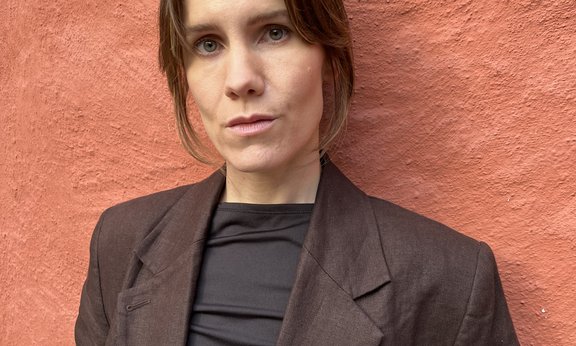
Monika Kirner-Ludwig is University Professor of English Linguistics at the University of Innsbruck (Austria) and research-affiliated with the University at Albany (SUNY, USA). She holds a venia docendi and a PhD in English Linguistics from the Universities of Innsbruck (2023) and Munich (2013). Her research interests and foci lie within Intercultural Pragmatics, the Pragmatics of Quoting, Humor Pragmatics and Telecinematic Stylistics. Recent publications include journal articles and chapters on (fake-)quoting in computer-mediated political dis-course (2020, 2022) and various other communities of practice (2018, 2020), the co-edited volume Telecinematic Stylistics (2020, Bloomsbury) and a handbook chapter on Formulaic humor in pop culture (2025, Mouton de Gruyter). She is co-editor of the Routledge book series New Waves in Pragmatics.

Monika Kirner-Ludwig

Abstract

This lecture discusses what the impact of far-right politics has been on the structures of constitutional law in Europe, specifically with reference to the protection of religious, ethnic, and sexual minorities. The lecture queries the constitutional practices and repertoires that they have engaged to express intolerance, as well as their historical antecedents, and explores how new forms of intolerance are shaped by the quality of democracy. The lecture offers examples from across the liberal-illiberal divide: France, the Netherlands, Hungary, and Poland. It highlights that vulnerability towards intolerance is inscribed in the structures of the law and is not merely inherent to either liberalism or illiberalism, as is often inferred.


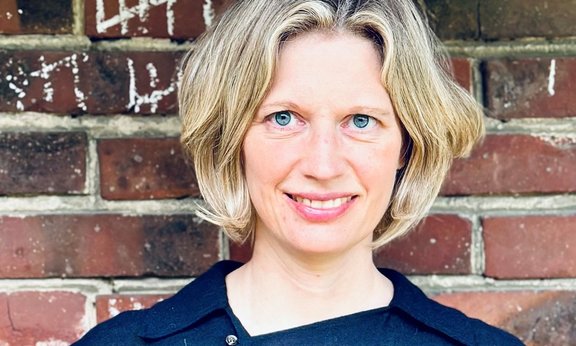
Dr. Marietta van der Tol is Landecker Lecturer at the University of Cambridge, and Senior Postdoctoral Researcher at Trinity College, Cambridge. Her key-publications include the book Constitutional Intolerance (CUP 2025), the special issue “What‘s ethnicity got to do with it?” with Dr. Elisabeth Becker in Ethnic and Racial Studies, and “Secularisation as the fragmentation of the sacred and of sacred space” with Prof. Phil Gorski in Religion, State, Society. Marietta convenes the Political Theologies Conference Series at Oxford.

Abstract

Recently there has been a surge of so-called “post-truth phenomena” that are shaking the foundations of liberal democratic societies. At the heart of this epistemic crisis is a deep distrust of science and the sincerity of its practitioners. This distrust has been fostered not least by intellectual currents that seek to expose scientific findings as interest-driven constructs. In light of these developments, it seems worthwhile to take a closer look at Michael Polanyi's (1891-1976) epistemology and philosophy of science, which has not received much attention in current philosophical debate. Drawing on his own experience as a natural scientist, Polanyi developed a sophisticated argument for the trustworthiness of science in response to the anti-scientific tendencies of his time, which had proliferated since the 1930s under the influence of Marxism. In this presentation, I will reconstruct key aspects of his argument and work out its persuasive core. I will focus on Polanyi’s theory of tacit knowledge, his account of the heuristic genesis of scientific theories, and his understanding of the scientific system as comparable to that of a republic. Against this background, I discuss the extent to which his approach can provide a convincing response to the recent scepticism about science.

Stefan Kosak is a doctoral candidate at the Munich School of Philosophy. His most recent publications are 'Bitch is Not a Term of Endearment’: A Metaethical Reflection on the Presumed Value Monism of Trash TV (with Claudia Paganini) and Was ist gemeint, wenn von Nachhaltigkeit die Rede ist? Über die Notwendigkeit kritischer journalistischer Aufklärungsarbeit zum Thema Nachhaltigkeit. He was awarded the Junior Researcher Prize of the Communication and Media Ethics Section of The German Communication Association (DGPuK).

Portrait von Stefan Kosak

Abstract

Most everyone agrees that the propagation of fake news is bad for democracy. The standard explanation is that fake news undermines citizens’ true beliefs and/or knowledge. In other words, the primary harm of fake news is epistemic. I argue that this is mistaken. The primary harm of fake news is affective rather than cognitive. Fake news is bad for democracies not because it affects what citizens know but because it alters how citizens feel about one another in ways that undermine collective action.

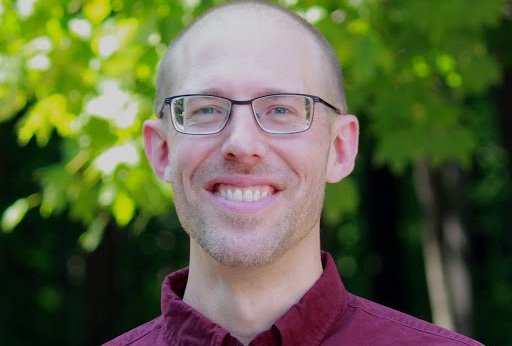
Justin McBrayer is professor at Fort Lewis College in Durango/Colorado, Department of Philosophy. He works on Ethics, Philosophy of Religion, Epistemology and Logic. Recent works include Beyond Fake News: Finding the Truth in a World of Misinformation (Routledge, 2020), The Blackwell Companion to The Problem of Evil (as editor, Wiley, 2014), and Skeptical Theism: New Essays (edited with Trent Doughterty, Oxford University Press, 2014).

Portrait von Justin McBrayer

Abstract

A number of philosophers working on the intellectual virtues have argued against the ideal of the intellectually autonomous knower who relies only upon themselves in their reasoning, judgment, and decision making. John Hardwig (1985), Elizabeth Fricker (2006), Jonathan Matheson (2022) and others argue that such a person will be cognitively lacking, knowing very little, and will have many crude and mistaken beliefs. I offer an account of the central features that distinguish virtuous forms of intellectual self-reliance from its more vicious cousins and argue that a strong commitment to thinking through for oneself is not only compatible with extensive reliance upon the intellectual efforts of others but also represents the virtuous ideal. I then report the results of a series of empirical studies that investigate the correlates of intellectual individualism. I found that valuing self-reliance in the intellectual domain is associated with increased arrogance, dogmatism, and belief in misinformation, conspiracy theories, and pseudoscience. These results confirm empirical claims virtue theorists have made about the problems and pitfalls of rejecting intellectual dependence or interdependence in favor of strongly individualistic approaches to reasoning and belief.

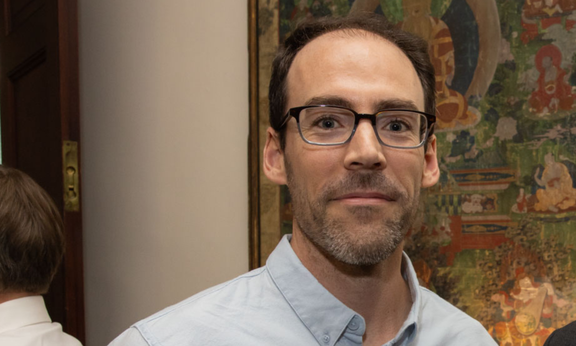
James R. Beebe is a Professor of Philosophy, Director of the Experimental Epistemology Research Group, and Member of the Center for Cognitive Science at the University at Buffalo (SUNY). Recent publications include The Pitfalls of Epistemic Autonomy without Intellectual Humility, Measuring Virtuous Responses to Peer Disagreement: The Intellectual Humility and Actively Open-Minded Thinking of Conciliationists (with Jonathan Matheson), The Empirical Case for Folk Indexical Moral Relativism, and Scientific Realism in the Wild: An Empirical Study of Seven Sciences and History and Philosophy of Science (with Finnur Dellsén).

Portrait von James R. Beebe
Nach oben scrollen