
NMR Core Facility
The NMR Core Facility at the Faculty of Chemistry and Pharmacy was established in 2025. The facility offers access to five solution-state NMR spectrometers: three open-access NMRs (400 MHz, 400 MHz, and 500 MHz) and two high-field NMRs with restricted access (600 MHz and 700 MHz, both equipped with cryoprobes).
We support researchers by providing access to state-of-the-art, high-resolution NMR spectrometers. Understanding the molecular structures of small molecules derived from chemical synthesis or natural sources, and their biomolecular targets (proteins, nucleic acids) is critical in various scientific fields. NMR spectroscopy is a powerful method for characterizing such entities and their interactions, providing insights into the constitution, conformation, and dynamics of low and high molecular weight molecules.
The NMR Core Facility is open for scientific collaborations within the University and scientific and industrial cooperations with external organizations.
Current activities at the NMR Core Facility include:
- Structural characterization of end products and intermediates from total synthesis
- Structural validation of natural products
- Structural characterization of transition metal complexes
- Structure & interactions of drug candidates and intermediates
- Structural characterization of nucleic acid building blocks
- Biomolecular NMR: Characterization of protein and nucleic acid structure and dynamics
OUR EQUIPMENT

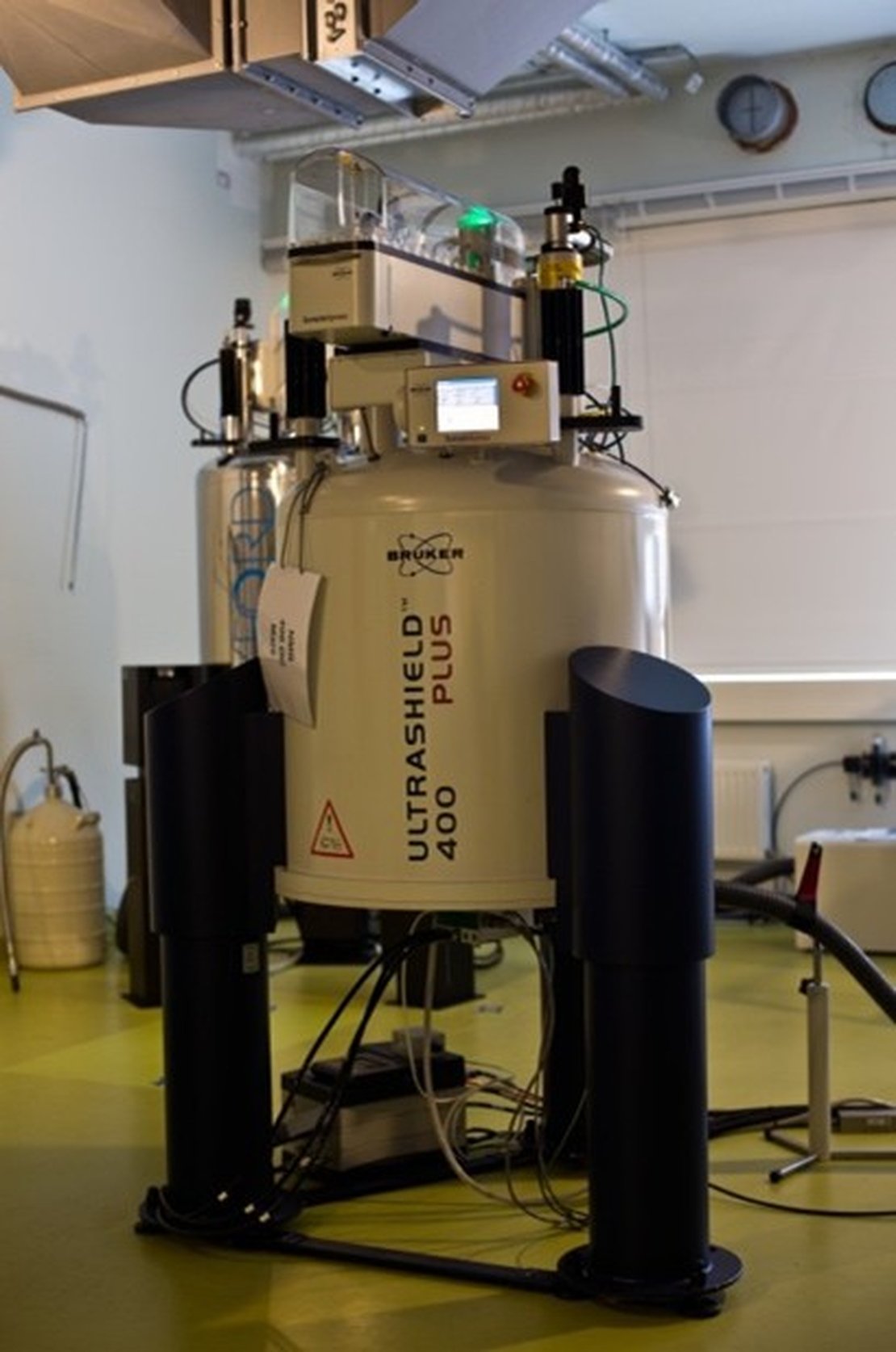
Mars
400 MHz NMR (2017)
Operation Mode: full automation, 25 °C
Magnet: Ultrashield Plus 400 MHz, 9.4 T (2025)
Console: Neo, 2-channels (2017)
Probes: Smart Probe BBFO, BBO Probe
- SmartCooler BCU-05 (down to 0 – 5 °C)
- SampleXpress Autosampler for 60 samples

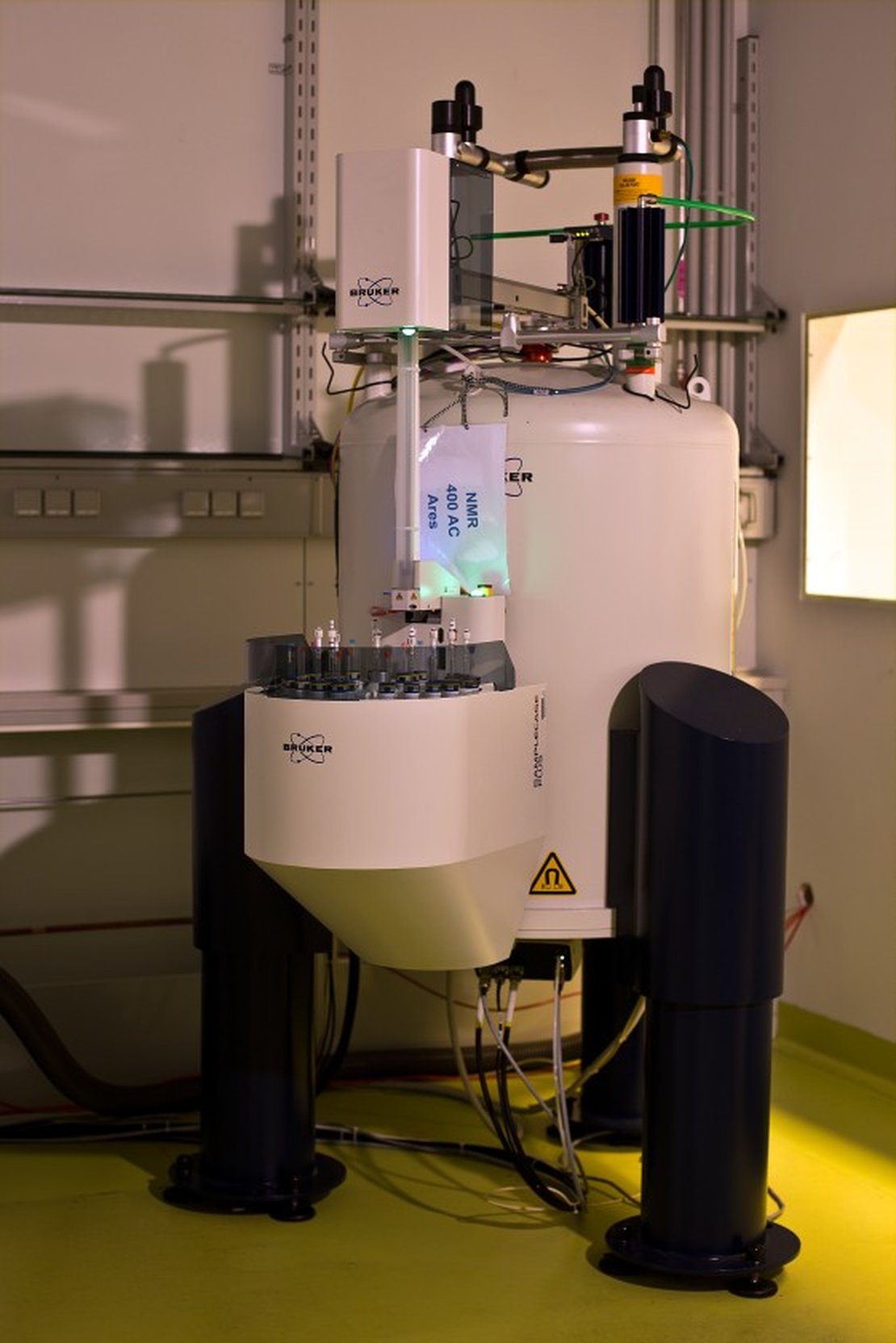
Ares
400 MHz NMR (2020)
Operation Mode: full automation, 25 °C
Magnet: Ascend 400 MHz, 9.4 T (2020)
Console: Neo Nanobay, 2-channels (2020)
Probes: iProbe SmartProbe
- SmartCooler BCU-II (down to -40 °C)
- Sample Case Plus for 60 samples

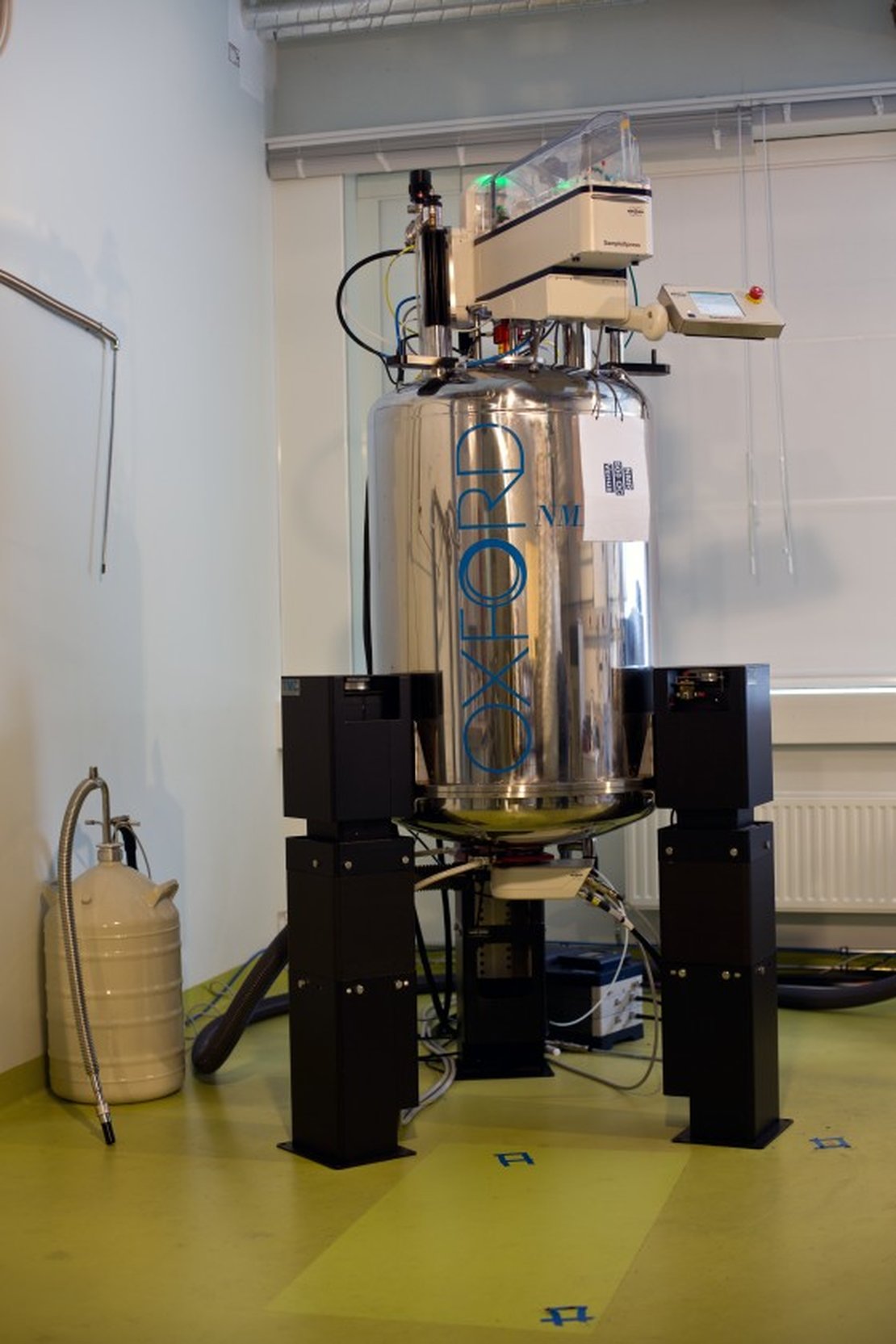
Venus
500 MHz NMR (1990 + 2025)
Operation Mode: full automation, 25 °C
Magnet: Oxford unshielded 500 MHz, 11.7 T (1990)
Console: Neo, 2-channels (2025)
Probes: iProbe SmartProbe
- SmartCooler BCU-I (down to 0 °C) and liquid nitrogen (LN2) heat exchanger equipment for measurements between -40 °C to -100 °C
- SampleXpress Autosampler for 60 samples

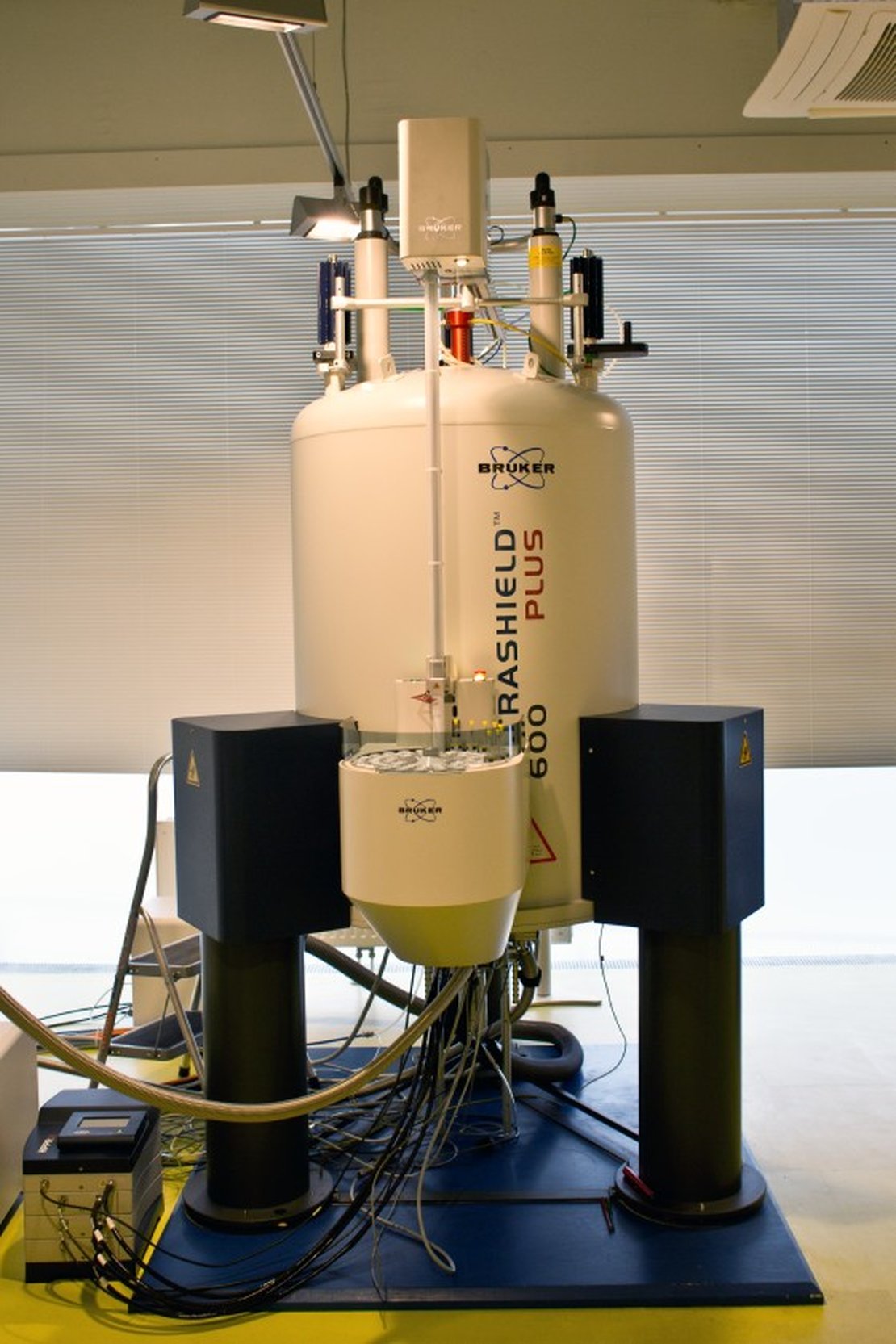
Jupiter
600 MHz NMR (2006 + 2022)
Operation Mode: restricted access
Magnet: Ultrashield Plus 600 MHz, 14.1 T (2006)
Console: Neo, 3-channels (2022)
Probes: TXI rt probe, TCI Prodigy probe
- SmartCooler BCU-I (down to 0 °C)
- Sample Case Plus for 60 samples

Jupiter Sample Case Plus
(2022)

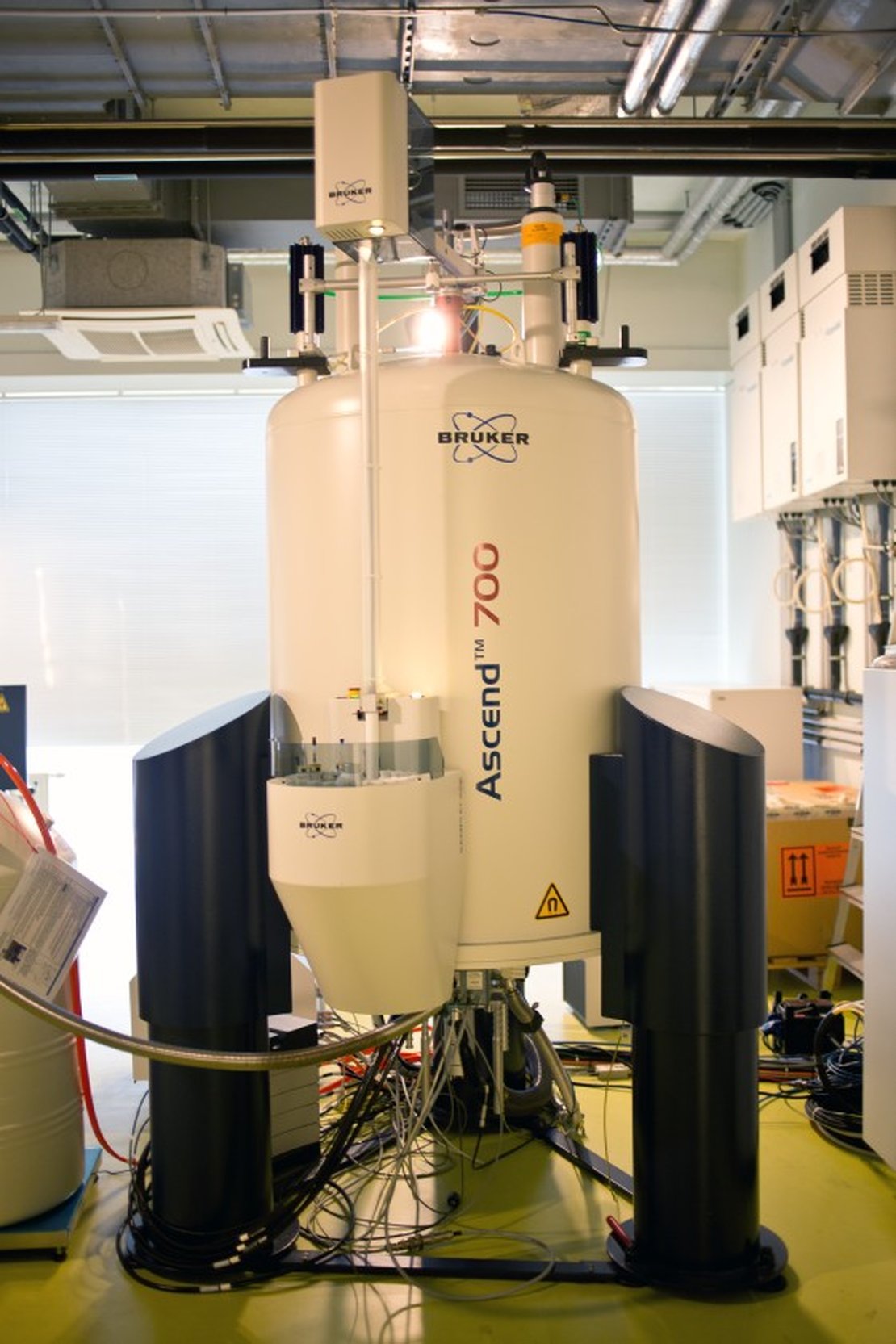
Saturn
700 MHz NMR (2017)
Operation Mode: restricted access
Magnet: Ascend 700 MHz, 16.4 T (2017)
Console: Neo, 4-channels (2017)
Probes: QXI (1H, 13C, 15N, 31P) rt probe, TCI Prodigy probe
- SmartCooler BCU-I (down to 0 °C)
- Sample Case for 24 samples
OUR SERVICES
Do-it-yourself NMR
Three open access NMRs - 400 MHz Mars, 400 MHz Ares and 500 MHz Venus - are available for our users. Routine NMR experiments are run in a fully automated fashion. Reservations are not necessary, and routine short-duration data (< 20 min.) are acquired on a first-come-first-served basis, amended by night queue acquisition for experiments on more dilute samples.
Our automated systems are currently equipped to acquire 1H and a wide range of heteronuclei including 13C, 15N, 31P, 19F, 11B, 29Si, 125Te, 77Se, 7Li and 195Pt with the option of 1H decoupling. Other nuclei between 109Ag and 31P frequencies can be added upon request. The systems are set up to acquire No-Deuterium NMR experiments in protonated solvents in full automation.
Variable temperature experiments (-80°C to +100°C) can be scheduled upon request (see section Contact).
Restricted access NMR
Two high field NMR operating at 600 MHz (Jupiter) and 700 MHz (Saturn) are available. These NMRs are run by trained operators and samples can be submitted.
Guidelines
- All samples must be supplied in a precision 5 mm tube (e.g. Norell 508UP) to give highest spectral quality. Cracked, scratched or broken tubes will not be accepted!
- The maximum solvent depth for 5 mm tubes should be 4.5 cm (600 µl), the minimum is 4.0 cm (500 µl).
- Run a 1H-NMR spectrum of your sample on one of the three open access NMRs (Mars, Ares or Venus).
- Download the submission form as pdf (see below).
- Label NMR tube, fill out sample submission form. Attach a 1H-NMR spectrum from one of the open-access NMRs to this sample submission form. This is mandatory! We reserve the right to reject samples if the sample quality is too low.
- Leave NMR tube and submission form in lab L.02.040.
- Sample can be picked up in L.02.040 after measurements. NMR data is made available via data servers.
To submit samples for one of the two high field NMRs (Jupiter and Saturn) download and fill in the Submission Form (PDF).
CONTACT
If you have any questions please contact us.