The Pahlavi Papyri in their Historical Context
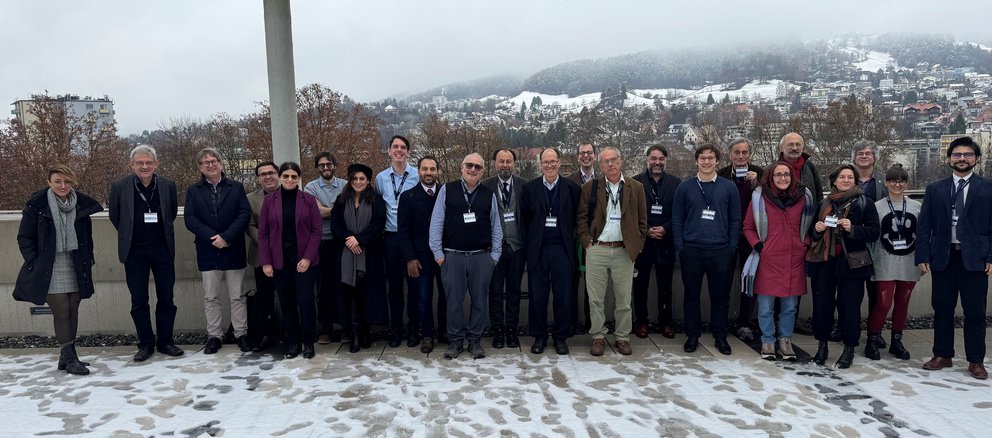
Pahlavi Papyri Workshop II in Innsbruck
Organization: Bernhard Palme, Robert Rollinger and Touraj Daryaee
Tuesday, 25 November – Wednesday, 26 November 2025
Seminar rooms 04K100/04M100 (4th floor) and 14 (1st floor)
Ágnes-Heller-Haus, Innrain 52a, 6020 Innsbruck
Programme Conference Report on H-Soz-Kult
This event is a follow-up of the first Pahlavi Papyri Workshop (Vienna 2024). It takes place within the framework of the Austrian Cluster of Excellence “Eurasian Transformations” and is related to the Project "The Pahlavi Papyri of the Austrian National Library", generously financed by the the PORKAR PRIVATSTIFTUNG and the UCI Jordan Center for Persian Studies and Culture.
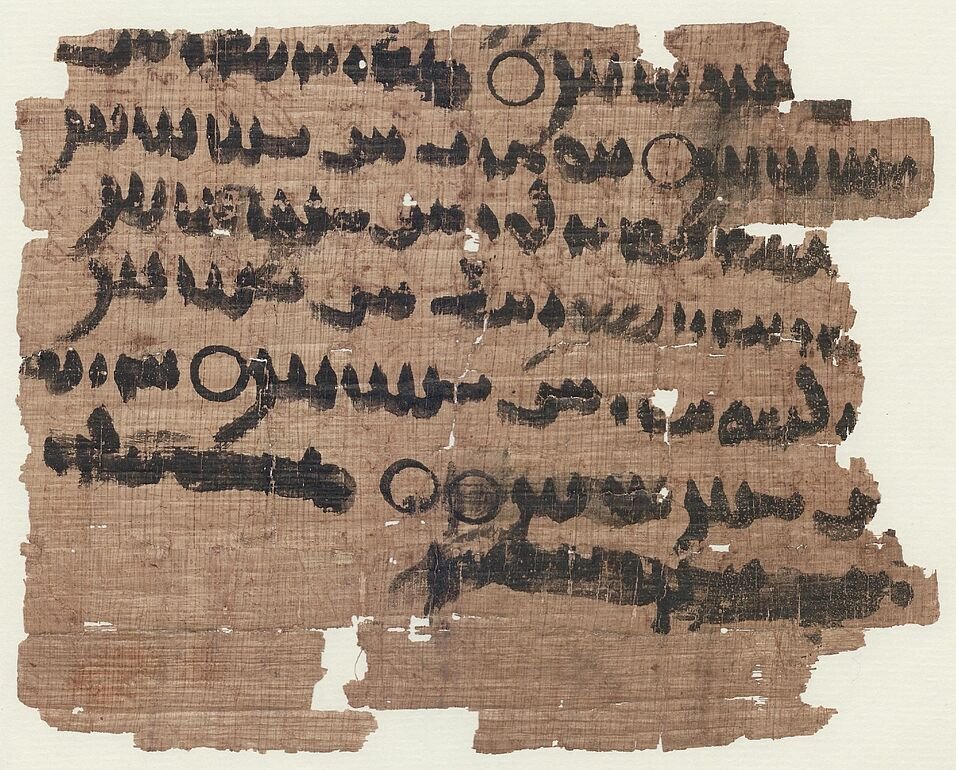
Middle Persian documents written in the difficult-to-read Pahlavi cursive have survived only in very limited numbers worldwide. The largest group of Pahlavi cursive documents is housed at the Papyrus Collection of the Austrian National Library in Vienna. They originate from Egypt and date from the narrow time window of 619–629 CE, when the land on the Nile temporarily came under Sasanian rule. These documents are particularly important since they are an exceptional remnant of the complex Sasanian bureaucracy and represent a period when the empire was at its political and military peak. However, less than five percent of the preserved Pahlavi documents have been published to date.
The workshop has set itself the goal of placing the evidence of these papyri in a broad historical context, i.e. the late but expansive phase of the Sasanian Empire, late antique Egypt and the transformation space from Byzantine to Iranian and Arabic rule. The first results of the project will also be presented at the workshop in order to explore the significance of the Pahlavi papyri for our knowledge of Sasanian rule and the internal structure of the Sasanian Empire. It is clear that this evidence will provide an extremely important corrective to the one-sided information on the Sasanian conquest provided by Greek and Coptic texts. The Pahlavi papyri truly have the potential to put our view of Sasanian rule over Egypt (and beyond) on a completely new footing. The input that leading experts in the history of Egypt and the Middle East in the seventh century can provide will be of central importance for the further development of the project.