

Goal 12 Sustainable consumption and production
Ensure sustainable consumption and production patterns
SDG 12 calls for action on all fronts: Adoption of sustainable practices and sustainability reporting on the corporate side; promotion of sustainable procurement practices and rationalisation of inefficient fossil fuel subsidies on the part of policy makers; environmentally conscious lifestyles of consumers; development of new technologies and production and consumption patterns by researchers, scientists and others.
SDG 12 calls for sustainable consumption and production that uses resources efficiently, reduces global food and other waste, and safely disposes of toxic and hazardous waste.
SDG 12 also emphasises the importance of strengthening scientific and technological capacity in developing countries for the establishment of sustainable consumption and production patterns and the development of tools to monitor the impact of sustainable tourism on sustainable development.
In monitoring SDG 12 in the EU context, the focus is on the progress made in decoupling environmental impacts from economic growth, reducing energy consumption and managing waste production and disposal.
Education for sustainable development
Suggestions for the development of specific sustainability competences from the action-oriented, transformative pedagogical and learning outcome-oriented guide Education for Sustainable Development Goals, UNESCO (2017)
Exemplary learning outcomes
Cognitive learning outcomes
- Learners understand how individual lifestyle choices influence social, economic and environmental development
- Learners understand production and consumption patterns and value chains and the interrelationship of production and consumption (supply and demand, toxins, CO2 emissions, waste generation, health, labour conditions, poverty, etc.)
- Learners know the roles, rights and obligations of different actors in production and consumption (media and advertising, companies, local authorities, legislation, consumers, etc.).
- Learners know strategies and practices of sustainable production and consumption.
- The learner understands dilemmas / trade-offs related to and system changes required to achieve sustainable consumption and production.
Socio-emotional domain
- The learner can communicate the need for sustainable practices in production and consumption.
- The learner can encourage others to engage in sustainable practices in consumption and production.
- Learners can distinguish between needs and wants and reflect on their individual consumer behaviour in the light of the needs of nature, other people, cultures and countries as well as future generations.
- Learners can visualise a sustainable lifestyle.
- Learners can feel responsible for the environmental and social impact of individual behaviour as a producer or consumer.
Behavioural learning outcomes
- Learners can plan, implement and evaluate consumption-related activities based on existing sustainability criteria.
- The learner is able to evaluate, participate in and influence decision-making processes on acquisitions in the public sector.
- The learner is able to promote sustainable production patterns.
- Learners can critically assume their role as active stakeholders in the market.
- Learners are able to scrutinise cultural and social orientations in consumption and production.
Exemplary contents
Advertising, peer pressure, affiliation and identity formation Production and consumption history, patterns and value chains as well as management and utilisation of natural resources (renewable and non-renewable energies)
Environmental and social impact of production and consumption
Energy production and consumption (transport, commercial and residential energy consumption, renewable energy) Food production and consumption (agriculture, food processing, dietary habits and behaviour, waste production, deforestation, overconsumption of food and hunger)
Tourism waste generation and management (prevention, reduction, recycling, reuse)
Sustainable lifestyles and diverse practices of sustainable production and consumption
Labelling systems and certificates for sustainable production and consumption Green economy (cradle-to-cradle, circular economy, green growth, degrowth)
Exemplary learning approaches and methods
Calculate and reflect on the individual ecological footprint
Analyse various products (e.g. mobile phones, computers, clothing) using life cycle analysis.
Run a company that produces and sells sustainable products
Carry out role plays dealing with different roles in a trading system (producer, advertiser, consumer, waste manager, etc.). Show short films / documentaries to help learners understand production and consumption patterns (e.g. Story of Stuff by Annie Leonard).
Develop and deliver an action project relating to production and consumption (e.g. fashion, technology etc.) Develop an enquiry-based project: "Is sustainability about giving things up?"
Examples
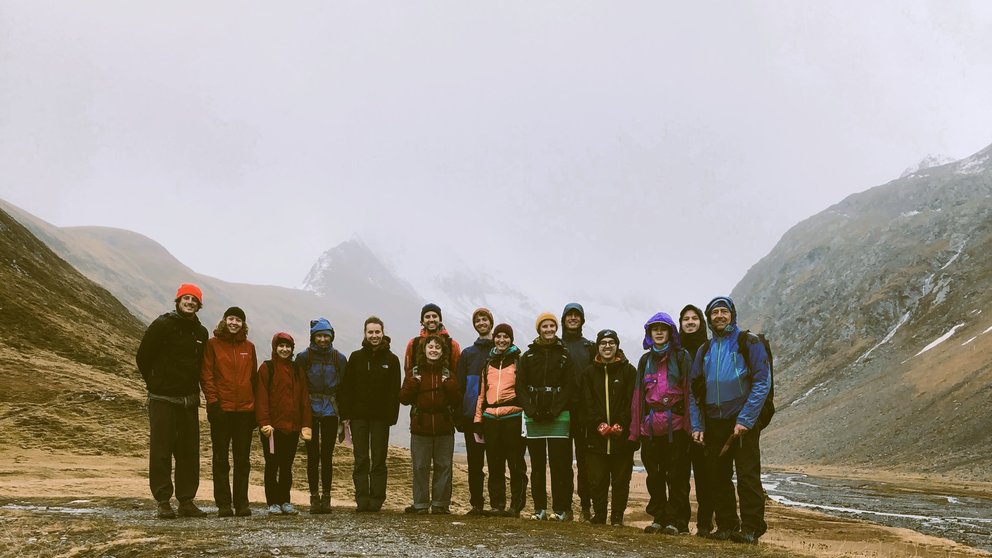
800871 EX Education for Sustainable Development in the Spirit of the Humboldt Brothers. A (self-)reflective expedition to the Alpine region: "As part of the "Education for Sustainable Development" initiative, Sabrina Bacher (Department of Teacher Education and School Research) and David Segat (Department of Geography) at the University of Innsbruck designed an interdisciplinary course in excursion format. Entitled "Education for Sustainable Development in the Spirit of the Humboldt Brothers. A (self-)reflective expedition to the Alpine region", the course combined geographical and educational science perspectives in order to make sustainable development tangible. The aim of the course was to promote a holistic, interdisciplinary understanding of nature in the spirit of Alexander von Humboldt. The aim was to sensitise students to issues of sustainability and strengthen their critical thinking and ability to reflect on human-environment relationships. The excursion made it possible to experience theoretical concepts in real contexts and to combine interdisciplinary perspectives. A three-pillar didactic approach was designed specifically for the course: (1) Wilhelm von Humboldt's educational ideal and ideas on tertiary education and its further didactic development by Wolfgang Klafki (2) findings from nature, experiential and experiential education and (3) the LOUIS (Learning Outcomes in University for Impact on Society) higher education didactic competence framework. A phenomenological concept of learning formed the basis for this, according to which learning is understood as a holistic process of experience and sense-making in which perception, physicality and subjective experience are at the centre. Through interactive, experience-based learning, students were encouraged to reflect on their responsibility for sustainable development and to see themselves as multipliers of sustainable practices. The teaching concept combines science, practice and personal development and makes a valuable contribution to university education for sustainability". Honoured with the State Prize for Excellent Teaching Ars Docendi (main prize 2025).
The Atlas of Good Teaching (available in German only) showcases, among other things, examples from all higher education sectors with a focus on Education for Sustainable Development (SDGs).
External links
Department of Economic and Social Affairs, United Nations (only available in English):
Targets and Indicators of Goal 12