
Early Career Researchers
Daniel T. O'Connor, MD Memorial Travel Awards
Thanks to generous support, distinguished early-career researchers will be selected for the Daniel T. O'Connor, MD Memorial Session and associated travel award.
A special scientific session for early career researchers (within 10 years of obtention of doctoral degree, or in training for doctoral degree under exceptional circumstances) will be organized during this symposium in memory of Dr. Daniel T. O'Connor who was a pioneer scientist in the area of chromaffin cell biology and a strong and constant advocate for early career biomedical researchers.
Selected candidates will make presentations of their studies in the ISCCB conference. The application process is not yet open.
Daniel T. O’Connor Early Career Researcher Symposium Awardees*
ISCCB-20, 21,22
2020
Debasis Das, PhD - Tata Institute of Fundamental Research (Mumbai, India)
Nikhil Gandasi, PhD - University of Gothenburg (Gothenburg, Sweden)
Sahar El Aidy, PhD - University of Groningen (Netherlands)
Giriraj Sahu, PhD - University of Alberta (Alberta, Canada)
2022
Pradeep Kumar Singh, PhD - Weill Cornell Medicine (NYC, USA)
Vikas Arige, PhD - University of Rochester (Rochester, NY, USA)
Wei Ying, PhD - University of California San Diego (San Diego, USA)
Maria Maldifassi, PhD - University of Bern (Bern, Switzerland)
Carmine Rocca, PhD - University of Calabria (Calabria, Italy)
2025
Stefanie Geisler, PhD - University of Innsbruck (Innsbruck, Austria)
Elke Muntjewerff, PhD - Uppsala University (Uppsala, Sweden)
Anna De Bartolo, PhD - University of Calabria (Calabria, Italy)
Quanfeng Zhang, PhD - Peking University (Beijing, China)
*Affiliations listed are those at the time of the award.
Daniel T. O’Connor, M.D. (1948-2014)
was an internationally recognized leader in the study of the genetic causes of hypertension and how the adrenergic nervous system regulates blood pressure.
Dr. O’Connor graduated from the UC Davis School of Medicine in 1974 and went on to a career in academic medicine, becoming a distinguished professor of medicine and pharmacology at the University of California, San Diego. He is remembered fondly for the care and respect he showed others -- his classmates, patients, staff and faculty while a student at UC Davis School of Medicine. These qualities would go on to expand into a full life in academic medicine – dedicating himself to his students, residents, fellows, junior faculty, colleagues and collaborative researchers through genuinely wanting them to succeed in first class clinical care as well as internationally recognized basic science research.
After completing a residency and fellowship at UC San Diego, Dr. O’Connor joined the faculty of the school’s Division of Nephrology-Hypertension. During his career, Dr. O’Connor published more than 400 original articles in major, peer-reviewed journals, covering research that spanned basic biochemistry through clinical trials. His research gave his trainees invaluable skills across the full spectrum of medical investigation, and the many fellows and junior faculty trained by Dr. O’Connor have succeeded in academic medicine, pharmacology, biotechnology and nephrology. His approach to research was notable for openness, sharing and collaboration with other labs, both locally and worldwide. He was widely recognized as the consummate teacher in both basic science teaching of MDs and PhDs, and a popular and learned educator in the clinical arena. He always had time to provide needed information to fellows and junior faculty members.
Dr. O’Connor developed an early interest in the proteins that package neurotransmitters, particularly Chromogranin A. His work on this molecule led directly to a blood test for endocrine tumors that is still in use, particularly to diagnose pheochromocytoma. He discovered that catestatin, a proteolytic product of Chromogranin A, is an important regulator of blood pressure. Catestatin and congeners are currently in development for clinical use. His efforts to genotype and phenotype hundreds of twins led to the discovery of polymorphisms that drive the sympathetic nerves to raise blood pressure.
His work led to numerous awards including election to the American Society for Clinical Investigation (ASCI), Fellow (ASH), the Harry Goldblatt Award for Cardiovascular Research (AHA), a UCSD Faculty Distinguished Lecturer Award, an Established Investigator of the American Heart Association award, as well as presidency of the Catecholamine Society (ASPET/FASEB), 10th Int’l Symposium on Catecholamine Research, and ISCCB (Dr. O’Connor and his team organized ISCCB-11 in San Diego in 2001). Dr. O’Connor was Co-founder/Co-Director of the UCSD Center for Human Genetics and Genomics, Co-Founder/Member of the UCSD Institute for Genomic Medicine, and was Director of the Hypertension Clinic at UCSD.
Typical of the high regard for and impact of his research was the comment of a reviewer of his academic career. “He is probably the single best investigator in the world in the area of the genetics of the sympathetic nervous system function in human essential hypertension. His scientific accomplishments have been enormously influential.” Another once noted that Dr. O'Connor was “…following the ‘bench to bedside’ approach long before the term “translational research” was coined.”
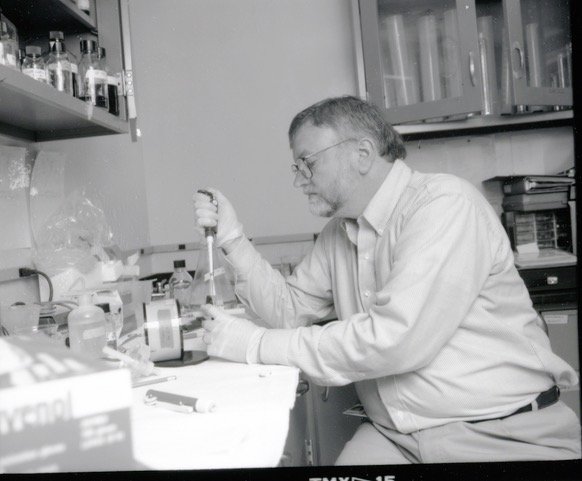
DT O'Connor google scholar page