
Innsbruck und Umgebung


The Golden Roof is a landmark of the capital of the federal state of Tyrol, and was built in 1420. In 1500 Emperor Maximilian I gave an order for the addition of an oriel, the roof of which is covered in 2,600 fire-gilded copper tiles.


The Helblinghaus was built in the late middle ages and decorated with an "icing-like" Rococo stucco in 1730 for which it is known. The building was named after Sebastian Helbling, who owned it from 1800 to 1827.


The Annasäule (St. Anna's Column) towers above the center of the Maria-Theresienstraße. The magnificent marble pillar commemorates the liberation from the Bavarian troops in 1703. The monument is named after the saint's day of Saint Anna on the 26th of July, on which the last Bavarian troops withdrew.


The Triumphal Arch is one of the most important and most impressive monuments of Innsbruck. It was built for the wedding of Archduke Leopold II and Maria Ludovica in 1765, and the southern side of the arch still testifies to this event. The northern side however commemorates the death of Emperor Franz Stephan in the same year.


The Bergisel Ski Jump, designed by Zaha Hadid and built in 2002, towers above the Olympic city of Innsbruck on the historic Bergisel, which has had great significance for Tyrol and Innsbruck in particular: in 1809, brave Tyroleans under their leader Andreas Hofer fought there for the freedom of Tyrol. And as early as 1925, the first ski jump was built on this historic site.
The sports facility has twice won Olympic honors: The Olympic flame was lit on the Bergisel at the 1964 and 1976 Olympic Games.

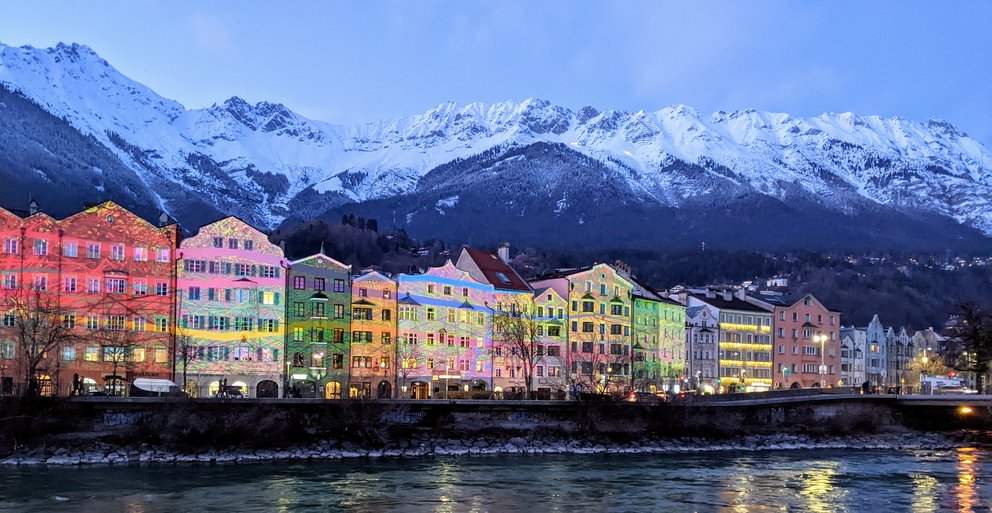
The historic row of houses in Mariahilf with its colorful facades is one of the most popular photo motifs in Innsbruck.

Alpenzoo Innsbruck, founded in 1962, is one of the highest zoos in Europe (750 m). This themed zoo of alpine wildlife is home to a unique collection of around 150 animal species with 2,000 animals from the entire Alpine region. Alpenzoo reintroduced endangered species like the bearded vulture, alpine ibex, and northern bald ibis in the wild.
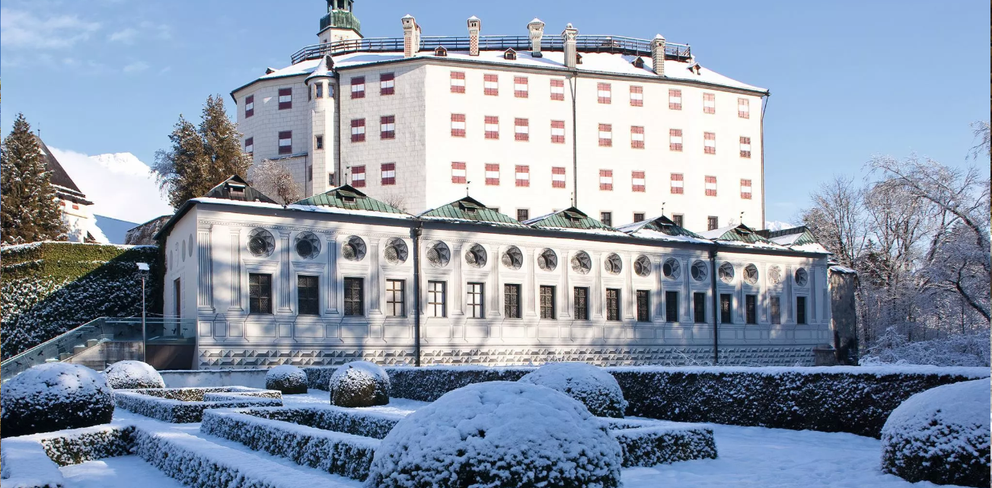
Ambras Castle is one of Tyrol's most important and most visited tourist attractions and is one of the most important sights in Austria.
Dating back to the 10th century, the castle “ad umbras” ('in the shadow') was extended during the Renaissance by Archduke Ferdinand II (1529-1595). He transformed Ambras into a magnificent palace and signed it over to his secretly married bourgeois wife Philippine Welser. Archduke Ferdinand II also founded the magnificent Ambras collections, for which he had a museum complex designed according to modern criteria built in the lower castle in the form of the Kunst- und Wunderkammer ('Cabinet of wonders and curiosities').


Innsbruck-Video von/by Innsbruck Marketing
More information about the town can be found on the tourist information website: