
University of Oslo
Nadine Mair, WS 2025/26
Oslo perfectly combines the perks of living in a big city with being close to nature, being just a short bus ride from the next lake and forest. The variety of events you can attend after a day spent hiking make a great mix, especially for people who like being outside.
Housing was organised by SiO and added a lot to my experience. Living in a student village with hundreds of fellow students, study rooms, a student pub and an on-site supermarket was great. Especially living so close to new friends felt special and made spontaneous hangouts and late-night talks about everything we were experiencing easy. The rooms I’ve seen are very spacious and equipped with modern furniture.
Most classes at university are worth 10 credits and require one weekly meeting, plus some optional classes with a teaching assistant. I found those very useful as students who have already passed this course provide you with insights or can answer questions that might come up while you work on assignments. In the programme I followed, the final exams looked very different between courses: for one I had to submit a short written assignment and hold a group presentation at the end, one class required to submit a portfolio consisting of four tasks and for one class there was an 8-hour online exam. The workload was also very different between the classes I took so don’t get too intimidated by the number of credits.
SiO also offers a very affordable gym membership including access to a pool and sauna as well as daily group classes. There are different clubs, one being directly on campus and one located in another student village. Joining ESN events is a great way of meeting new people and trying out new activities. Follow them on Instagram to stay up-to-date and don’t be afraid of going to events by yourself, you will for sure connect with people. University also offers a variety of clubs you can join, like the pizza club I joined :) The clubs are presented at the beginning of the semester and there is something for everyone. From what I have heard, many of them are free or ask for a small contribution. For the pizza club it was approximately 5€ per semester and they provided all the ingredients and pizza ovens. Something else to know is that the Munch museum offers free entry from 6 pm on Wednesdays and there are many parks with sculptures and a nice view that are worth going to - and free!
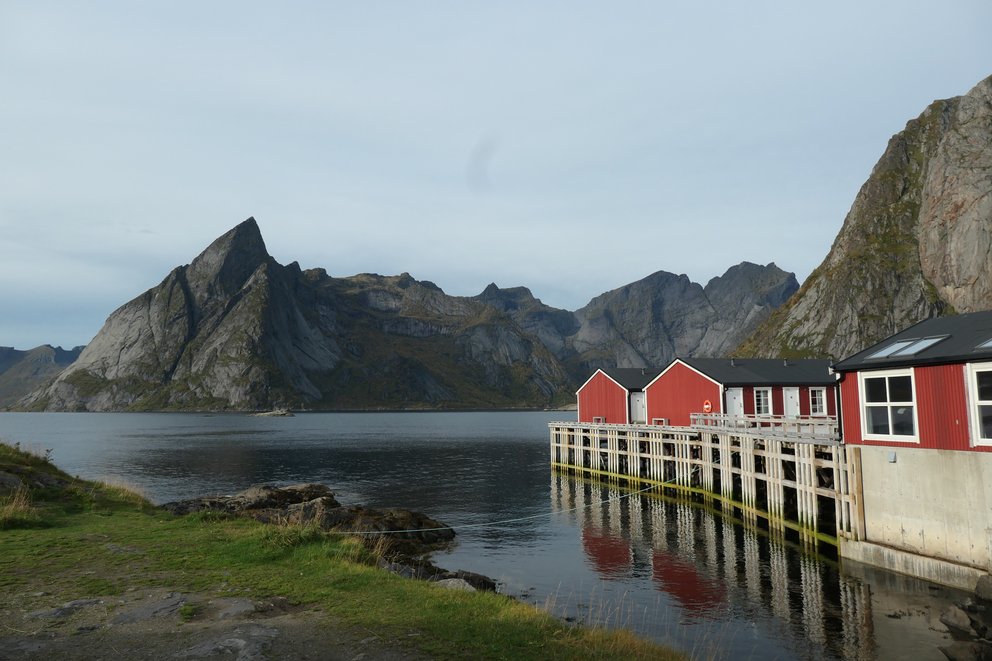
Depending on how you schedule your courses, it might happen that you have 3-4 consecutive days in which you don’t need to attend classes and can take some trips. I highly recommend taking the train to Bergen, the views you’ll experience on the way are worth the time it takes. Taking the bus one way can be a cheaper alternative. While in Norway, I also took a trip to Lofoten and it was my personal highlight, hiking mountains confining the sea was incredible. ESN also organises trips, I joined the one to Finnish Lapland and it was fantastic!
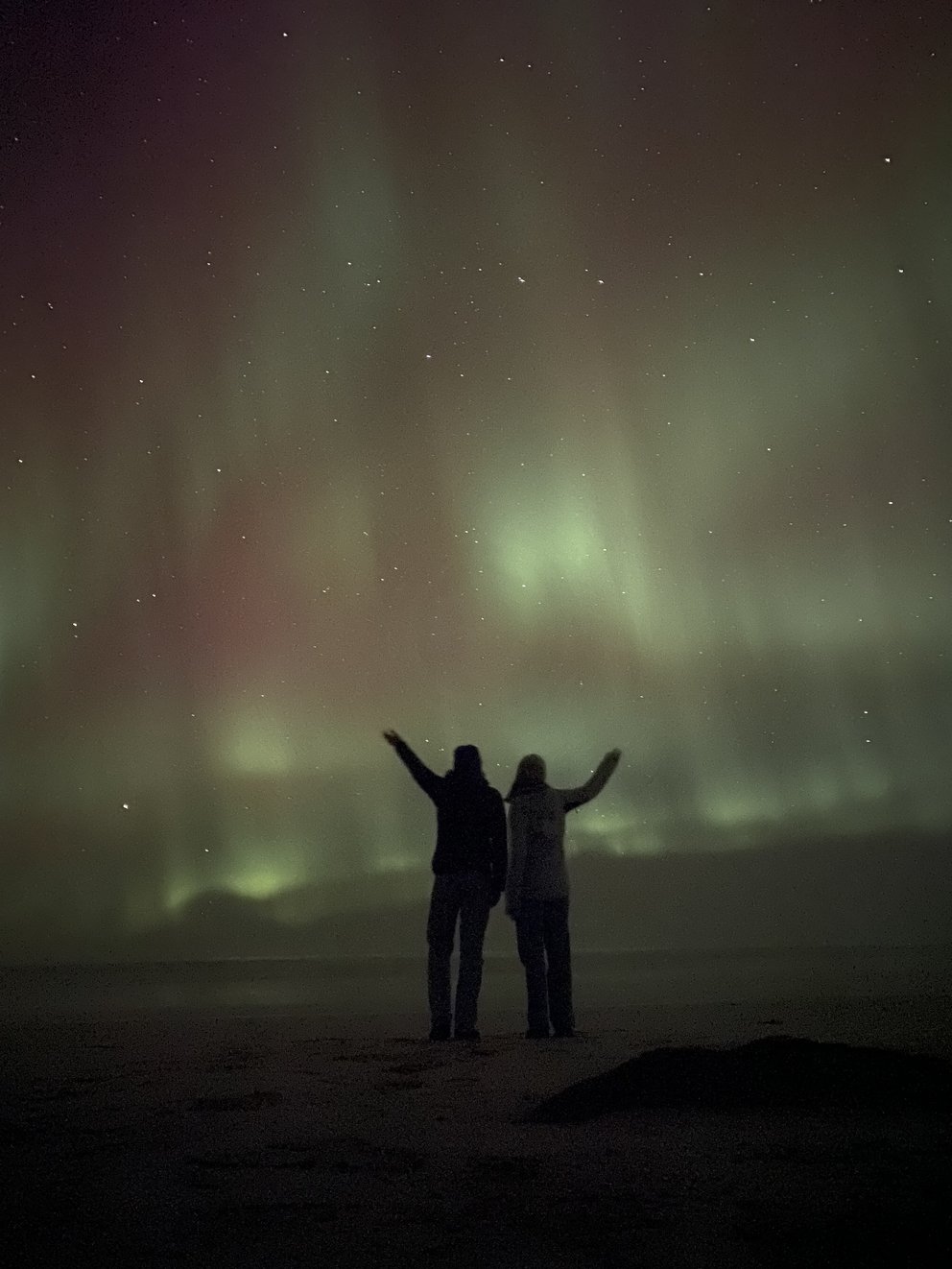
A fun fact about life in Oslo is that you need an app for almost everything, even your student ID and, if you want, the washing machines. What I found very useful: yr for the weather forecast and vy for public transport. There is also a free app that displays the likelihood of seeing the northern lights in your surroundings, which I recommend. All in all, I highly recommend spending a semester in Oslo and taking in the beautiful landscapes Norway offers.
University of Oslo
Linda Weirather, WS 2025/26
I spent the winter semester of 2025 at the University of Oslo for my Erasmus exchange, and it was without doubt the most rewarding period of my life. These months have shaped me profoundly, both academically and personally, and influenced the way I see my future. I have learned an incredible amount within my field of study as well as about myself, different cultures, and the Norwegian way of life. Through new and inspiring experiences almost every single day, I have grown more during this short period than ever before.
Preparation:
The preparation process for my Erasmus stay was clearly structured and exceptionally well organized from the very beginning. Thanks to the close cooperation between the departments, the Erasmus coordinators and the International Office in Innsbruck and Oslo, every step of the process was transparent and easy to manage. As long as I followed the given instructions, the entire process felt straightforward.
Housing:
A particularly reassuring aspect of my Erasmus stay in Oslo was the prospect of student accommodation. As an Erasmus student accepted at the University of Oslo, you are informed about the next steps soon after admission and applying for housing through SiO is one of the first priorities. The process is clearly outlined, and as an international student, you are almost guaranteed a place in student housing. Even if you receive your housing confirmation only a few weeks before arrival, there is no need to worry. This is entirely normal and part of the usual procedure.
I lived in the student village Sogn, which turned out to be an excellent choice. The university campus was within walking distance, taking about 25 minutes on foot. In addition, the public transport connections were very convenient: the city centre, nearby nature, and lake Sognsvann were all easily accessible. The student village itself offers everything necessary for everyday life, including a supermarket and a student bar that regularly organizes social events.
University:
During my semester in Oslo, I decided to take several master’s courses that complemented my master’s programme in English teacher education. Looking back, this turned out to be an excellent choice, as the courses enriched me academically. The University of Oslo offers a broad selection of master’s courses, allowing students to structure their semester individually according to their interests and academic focus.
One noticeable difference compared to the University of Innsbruck was the course structure. Each course in Oslo was worth 10 ECTS credits, which meant that I attended three courses in total. This allowed me to engage more deeply with each subject. Depending on the course, teaching methods varied, but many classes placed strong emphasis on discussion, group work, and active participation. I found this particularly engaging, as the open exchange of ideas not only deepened my understanding of the topics but also enhanced my critical thinking skills. The close interaction with fellow students and teachers created a supportive learning atmosphere that made my academic experience in Oslo truly distinctive.
In terms of assessment, the workload was manageable. The exams, presentations, and academic papers required consistent effort but were well structured. A difference from Innsbruck was the requirement to pass midterm exams in order to qualify for the final exam.
Beyond academics, the campus is remarkably green, offering a pleasant environment both indoors and outdoors. All faculties are located on one main campus, which creates a strong sense of community. The university also provides several excellent canteens (including buffet options that I would highly recommend). At the beginning of the semester, my faculty organized an introduction week, which was extremely helpful. Overall, studying at the University of Oslo was not only academically stimulating but also inspiring in its atmosphere and environment.
Social Life:
Social life in Oslo is exciting and offers numerous opportunities to make friends. At the beginning of the semester, the university organizes several social events that make it easy to meet new people and settle quickly. There are plenty of student associations you can join, ranging from sports clubs to creative and cultural groups.
I would especially recommend becoming involved with ESN. This organization focuses on international and exchange students and offers a wide variety of events. I participated in several hikes organized by ESN. It was a wonderful opportunity to explore Norway’s breathtaking scenery, and it was also ideal for making new friends. They also organize larger trips. For example, I joined the trip to Lapland, which was truly magical.
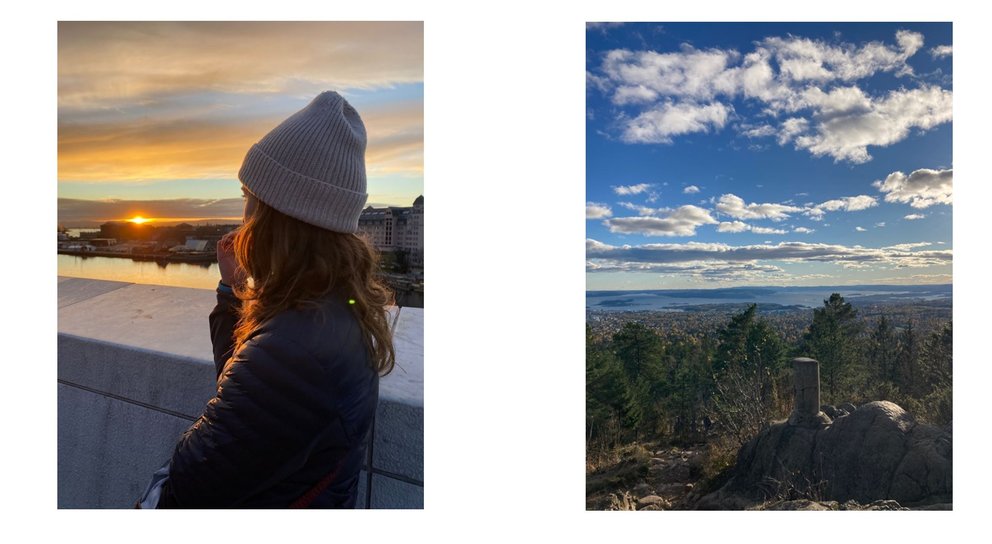
Oslo itself makes social life even more special. What I loved most was the unique combination of city life and nature. Within a short time, you can move from lively streets to peaceful forests and lakes. As someone who loves both being outdoors and enjoying an active city atmosphere, this balance was perfect for me. I highly recommend exploring the hiking trails around Oslo. In the city, the district of Grünerlokka quickly became my personal favourite, with its charming second-hand shops, cosy cafés, and vibrant bars that give the area a unique and creative atmosphere.
I also made great use of SiO’s sports facilities. The membership is very affordable and offers access to a wide range of sports courses, several gym locations, modern fitness studios, and even a swimming pool. If there is snow, you even can go skiing or cross-country skiing outside the city. Unfortunately, during my stay there was no snow at that time, but instead I discovered the large ice-skating rink in Frognerparken, which turned out to be an incredible experience as well. And of course, Oslo also offers a lively and diverse nightlife, providing the perfect balance to its outdoor activities.
Overall, my Erasmus semester in Oslo was an unforgettable and life-shaping experience that enriched me academically and personally in lasting ways.
University of Oslo
Eva Thaler, SS 2025
Studying in Oslo was simultaneously one of the most challenging and rewarding experiences in my life. I learned a lot throughout my stay: for my studies, about myself, for myself, and about cultures. I am very happy that I chose the University of Oslo (and that it chose me), not only because the university has a clear webpage and provides you with important information via email, which makes the organization process easy, but also because Oslo was all I could have hoped it to be and more.
All Erasmus students are granted a student room in Oslo if you apply for a room via SIO. I lived in Kringsjå, and I got a room that was affordable and tidy. The greatest advantage of living in Kringsjå was the lake nearby. I walked around it every day because it made me feel unwavering and mentally strong in a time when everything is new, sometimes unsteady and adventurous. Such a huge adventure can be simultaneously great but also sometimes a bit demanding - especially when you are a creature of habit, such as I am. (Enjoyable) habits can give one a lot of strength and security, I figured out.
A (perhaps irrelevant) piece of advice in between: only buy what is necessary if you are staying one semester abroad. Keep in mind that you have to leave the things in Oslo that don't fit in your luggage. I advise being creative when you furnish your room [e.g., who needs a real toothbrush cup if there are paper cups available?]. Moreover, there are a lot of second-hand shops in Oslo which I warmly recommend for empty student-purses. Oslo is quite expensive, especially concerning food and alcohol. I almost starved the first few days because I did not want to spend so much money on food. At some point I discovered the on-campus restaurants, which offer affordable food. I also recommend attending the Knutepunkt events whenever possible for you because you get free entry to a lot of important sights in Oslo. Needless to say, the more money you have aside, the easier and less stressful the semester in Oslo will be. However, with a few tricks, people with fewer means to an end can have a good time in Oslo, too. Just be creative!
I attended the last courses of my master's program in Oslo. I can only recommend the University of Oslo if you are in a late circle in your studies because the university offers a variety of interesting courses for master's students. The university courses I picked were incredibly interesting and rewarding. The difficulty of the courses was adequate, and the courses were similarly structured as those in Innsbruck. Structure-wise, the only difference I noticed was that one needs to pass an obligatory qualifying paper as mid-term assessment. A well thought-out qualifying paper is very helpful because it minimizes the workload at the end of the semester when other things are in your head, such as, for instance, planning your move-out and flight back home. Not having to plan what you write about in your research paper keeps away a lot of stress in times of stress. What I figured out too late was that one can attend a Norwegian course worth 10 ECTS at the university. If I were able to repeat my semester abroad, I would attend this course!
In general, I especially recommend Oslo to athletes and also to those who want to become one. If you see so many people doing sports, it can become contagious. Oslo is also a city that offers the best of both worlds: big city life that is only a stone's throw away from beautiful and pristine nature. Those who value big city life, nature, and sports are right on the mark in Oslo, I can promise.
My favourite spots in Oslo:
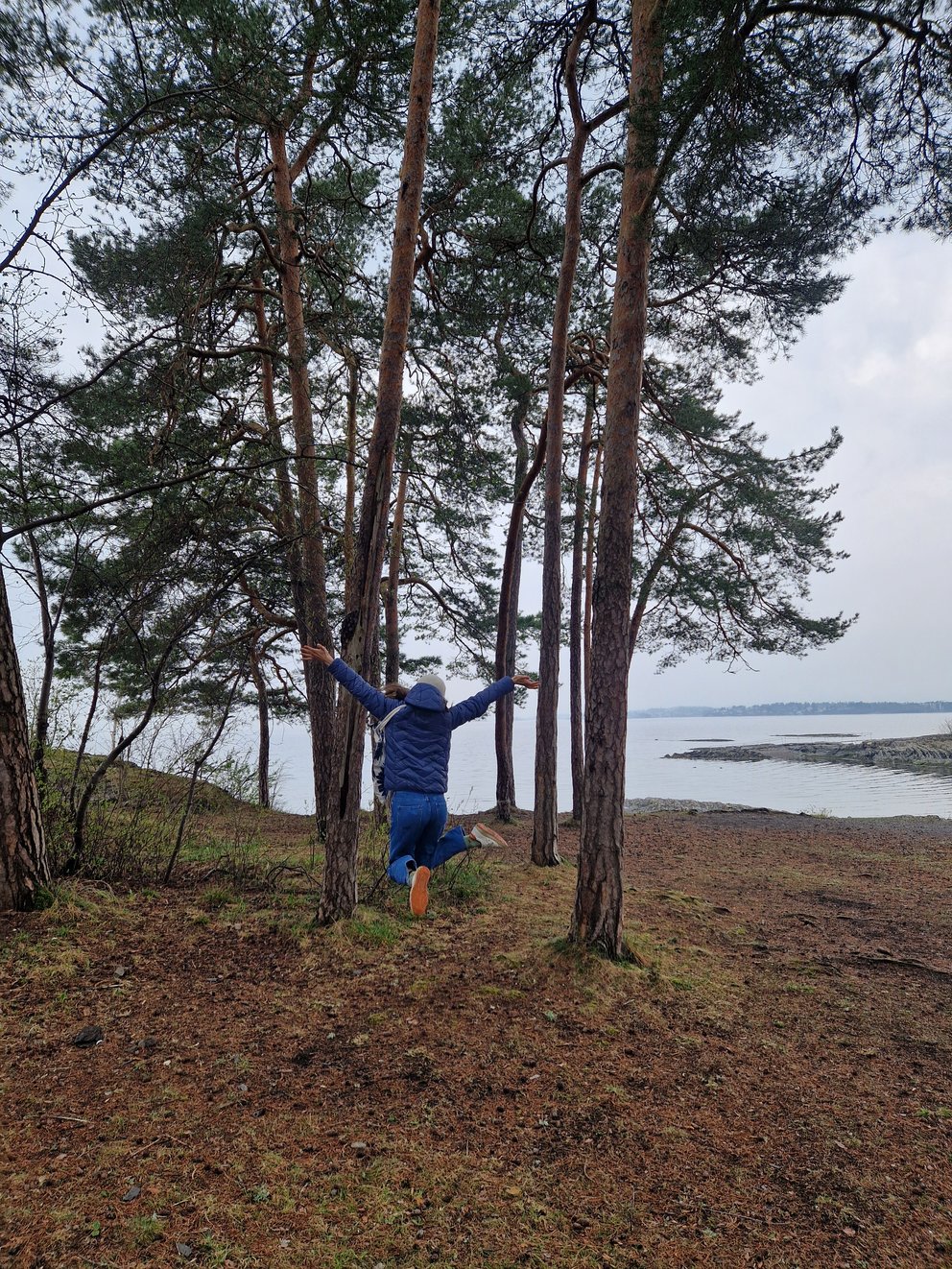
Bygdøya/Huk
Sognsvann
Deichmann Bjørvika
Erasmus Semester at the University of Oslo – Spring 2024 (January-June)
Tobias Unterhofer, SS 2024
I spent my Erasmus semester at the University of Oslo during the Spring of 2024. There are a few things prospective students should know, so I’ve broken this report into several categories.
Preparation:
The application process might seem daunting when you hear about it from students who have already studied abroad, but don’t be alarmed. As long as you attend all the meetings and webinars and keep an eye on your OLAT (online learning platform), it will be manageable. Take it step by step, and if you have any doubts, don’t hesitate to contact the Erasmus coordinators at UIBK—they’re very helpful.
Housing:
Once you're accepted by the University of Oslo, they will keep you updated on the next steps. One of the most important tasks is securing accommodation, and here’s where the website SiO becomes invaluable. As an international student, you get priority and are almost guaranteed a room. SiO manages most of the student housing in Oslo, and it’s your best bet for finding a place. The prices are also more reasonable than you might expect for Scandinavia—I paid €410-430 per month at Ullevål Student Village, which is quite affordable, even compared to Innsbruck. (SiO homepage: SiO Housing).
Most students live in Kringsjå Student Village, located at the edge of the city near a beautiful lake and forests. I’d recommend it, especially because there’s a metro station right in front of the village, making travel easy.
If you prefer to be closer to the university, I’d recommend Ullevål, which is also the cheapest option. Sogn is a nice middle ground between these two, located next to the stadium. However, this advice only applies if you’re studying at the main campus.
University:
I was pleasantly surprised by how courses are structured in Oslo. I’m studying English and American Studies, and I’m used to receiving 2.5 or 5 credits per course in Innsbruck. However, in Oslo, most courses are worth 10 credits, meaning you only need to take three courses to complete the required 30 credits for the semester.
While the courses were more demanding in terms of homework and weekly preparation, they were manageable. The exams were also not overly difficult—if you stay engaged during the semester, good grades are achievable. Two of my seminars ended with a 3-day take-home exam, where we received an essay question on Monday and had until Thursday to submit a 7-9 page essay with 4-5 secondary sources. Essentially, you have three days to write a paper. My other course required a 5,000-word seminar paper, which was similar to what I was used to in Innsbruck.
There are gyms at various university locations. You don’t need to be a gym buff to find the €24 monthly subscription useful, as it allows you to participate in various sports (football, floorball, tennis, etc.), and you can even rent equipment like tents and skis.
Social Life:
Moving to a new city and university can be challenging, especially when you don’t know anyone. It’s important to attend as many welcome week activities as possible to meet people and start forming friendships. Be open-minded and step out of your comfort zone. Once you make friends—whether through your courses, accommodation, or the welcome events—you’ll have a great time in Oslo.
The city offers a variety of experiences. You can enjoy outdoor sports like cross-country skiing and sledding, or explore the trendy and modern vibe of neighborhoods like Grünerløkka. Oslo’s location by the fjord, with its surrounding hills and forests, makes for a stunning backdrop no matter where you are in the city.
Although alcohol is expensive, student pubs often host events like pub quizzes or themed nights. Beer costs around €5 for 0.5 liters, which is relatively affordable by local standards.
When I first set foot on Norwegian soil in mid-January, the temperature was a freezing –25°C. Make sure to pack wool socks, winter shoes, gloves, and a good winter jacket! Also, the ground gets incredibly slippery, as the streets are frozen from January well into late February, so walk with caution.
All in all, those five months up north were the most interesting and fun time of my life. 10/10, would highly recommend it to anyone!


