
About the project
Forecasting impacts of land-use and climate change on ecosystem services from shrub-encroached mountain grassland (LUCSES)


LUCSES project is funded by the Austrian Science Fund FWF and the French National Research Agency ANR: I-4969
Shrub-encroached mountain grasslands
Ongoing abandonment of mountain meadows leads to their shrub-encroachment and thus to functional changes. These changes affect the characteristics of ecosystems and thus the services of the mountain meadows for us humans: the ecosystem services (ES). Within previous common international projects, researchers involved in LUCSES were already able to identify important ES of mountain grasslands and to model these from the past to the future. Characteristic plant traits such as leaf area, nitrogen- and carbon content of the leaves as well as soil traits such as total nitrogen content and soil organic matter (SOM) are successfully used as indicators of ES (e.g., carbon storage, soil fertility, soil stability). As part of the LUCSES project, the characteristics of shrubs will now be incorporated into this trait-based approach.
The core hypothesis of LUCSES is that shrub colonization results in a tipping point in relationships between traits and processes of nitrogen- and water cycling, and that this change can be related to characteristic plant traits and to mycorrhizal functions. For the first time, functional implication of mycorrhization, which contributes significantly to the nutrient- and the water supply, is also included in this type of trait-based approach.
Our aims
On the one hand, LUCSES provides an unprecedented database of plant characteristics for dwarf shrubs and, on the other hand, the prerequisites for the calculation of ecosystem functions and ecosystem services of shrub ecosystems over a wide range of succession stages. The combination of nitrogen and water balance with the quality and quantity of mycorrhization is a research frontier and leads to a better functional understanding and thus providing fundamental knowledge in alpine plant ecology.
Results of LUCSES are published scientifically, but also on the concept of ecosystem services to decision makers and practitioners within existing communication networks of the involved research institutions LECA Grenoble (Laboratoire d'Ecologie Alpine) and UIBK (University of Innsbruck).
Workflow of the project
The project consists of three work packages:
- WP1: Field quantification
- WP2: Climate manipulation
- WP3: Trait-based ES models
WP1 - Field quantification of functional pathways in shrub-encroached grasslands
In WP1 we will test functional pathways from community-level plant traits, soil water and nitrogen availability in grasslands with varying levels of shrub colonization.
Field work
During field work we implement a series of different methodologies to gather data from aboveground and belowground compartments. During the summers 2021 and 2022 we took plant samples from herbaceous and shrub species as well as soil samples for microbial community analysis and soil parameters.


Lab work
During lab work we process the samples taken during fieldwork in order to obtain data on C, N, P stocks, nutrient availability, microclimatic data, plant traits and fungal structures and composition.


WP2 – Climate manipulations
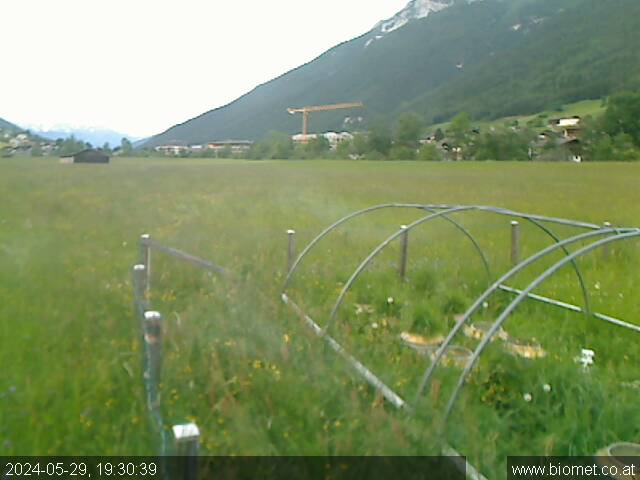
The aim of WP2 is to undertand the effects of increased drought and earlier snowmelt on nitrogen and water cycles in shrublands through climate manipulation in semi-controlled conditions. We will use high precision lysimiters for our experiments, which are located in the Stubai valley (Austria).

You can follow our experimental site with the lysimeters through the webcam in Neustift.
WP3 – Trait-based ES models
WP3 will build on the results of WP1 and WP2 to produce trait-based ecosystem service models, which will be applied in Austrian and French mountain landscapes.