
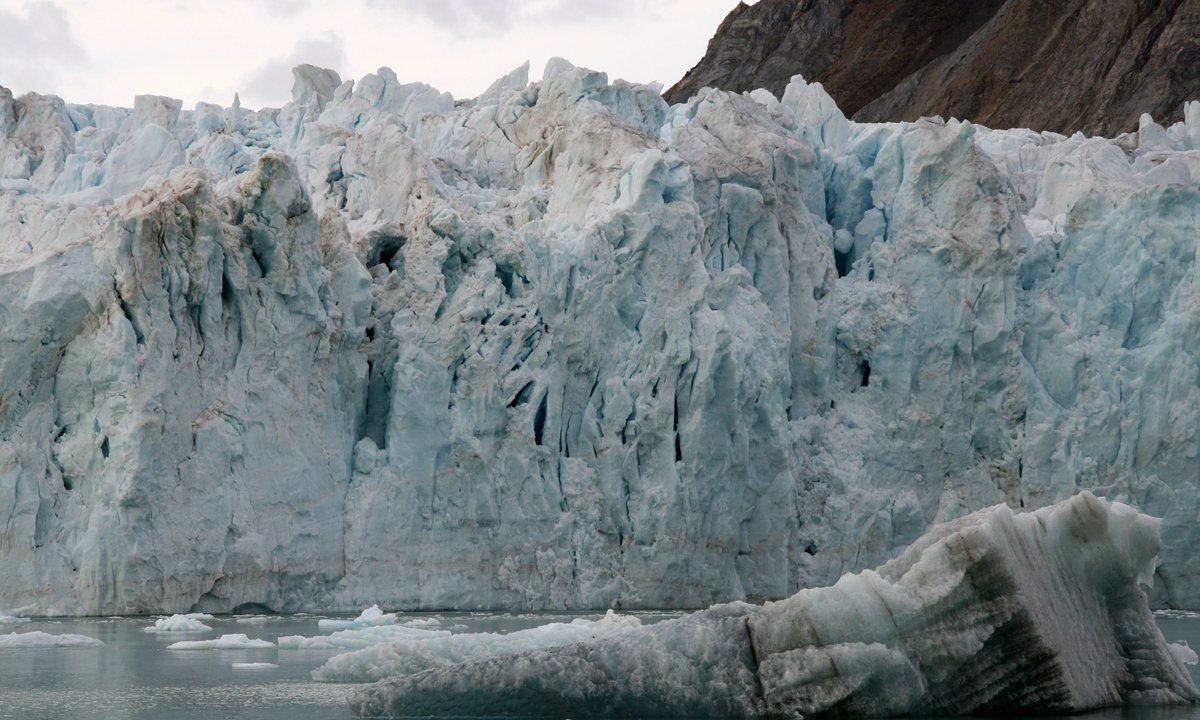
The more than 215,000 glaciers worldwide have long been massively affected by the consequences of global warming due to the climate crisis. The increasing rates of melting are not only leading to an increase in natural hazards in the corresponding areas, but also to a rise in sea levels and a threat to the water supply for around two billion people worldwide. In the latest report of the Intergovernmental Panel on Climate Change (IPCC), thousands of researchers have pointed out the dramatic consequences of global warming - especially for glaciers already now and in the near future. "We are unfortunately on track for a temperature increase of +2.7°C due to the current level of emissions. This would result in the disappearance of two thirds of all glaciers worldwide by 2100," explains Fabien Maussion from the Institute of Atmospheric and Cryospheric Sciences at the University of Innsbruck, co-author of the Science study. The large team of climate researchers led by David Rounce from Carnegie Mellon University in Pennsylvania has now recalculated how exactly this development will continue in the coming decades and what can still be saved, and has significantly improved the methodology compared to previous studies. The glaciologist Maussion contributed projections of potential changes in mountain glaciers based on the Open Global Glacier Model OGGM, which was co-developed at the University of Innsbruck. This is the first openly accessible global model for simulating the development of all glaciers worldwide, and for this study it was combined with a model from Carnegie Mellon University. "In this study, we have improved the methodology in principle, as we have combined satellite observations and models and can thus accurately take into account regional characteristics and dynamic development," says Fabien Maussion.
Four scenarios for all glaciers
Since temperature scenarios are often used at the socio-political decision-making level, such as recently at the UN Climate Change Conference COP27, the climate researchers decided to calculate the consequences for glacier development using four assumptions. The projections show the response to global temperature changes of +1.5°Celsius (C), +2°C, +3°C and +4°C by 2100 compared to pre-industrial levels for each of the world's glaciers. The results show dramatic loss, but also wide variation in magnitude: between 26 and 41 per cent of the total mass of glaciers will be lost by the end of the century. In the "best-case scenario" of +1.5°C, a quarter of the total mass and thus 50 percent of the glaciers would melt completely. An increase in the global average temperature of +2.7°C, which must be assumed in view of the current agreements on emissions reduction, would result in almost complete deglaciation of entire regions in the mid-latitudes with Central Europe, Western Canada, the USA as well as New Zealand, according to the study. This would result in a higher rise in sea level than previously assumed. "Unfortunately, it is already too late for very many glaciers, but that doesn't mean there is nothing we can do. Any reduction in greenhouse gas emissions and thus a move away from fossil fuels will help to save any remaining ice masses and limit sea level rise," says Fabien Maussion.
Publication:
Global glacier change in the 21st century: Every increase in temperature matters. David R. Rounce, Regine Hock, Fabien Maussion, Romain Hugonnet, William Kochtitzky, Matthias Huss, Etienne Berthier, Douglas Brinkerhoff, Loris Compagno, Luke Copland, Daniel Farinotti, Brian Menounos, Robert W. McNabb. Science, 6 January 2023 Vol 379 Issue 6627
DOI: 10.1126/science.abo1324, https://www.science.org/doi/10.1126/science.abo1324
Links:
Fabien Maussion
Institute for Atmospheric and Cryospheric Sciences
OGGM glacier model