
Making Sense of America: Conversations on Matters and Methods
Organizers: Ass.-Prof. Dr. Mahshid Mayar & Philipp Helge Leonhardt, MA
Where: Institut für Amerikastudien - University of Innsbruck - Innsbruck, Austria
When: 2-3 July 2026
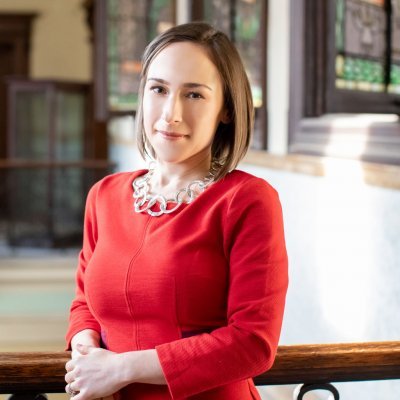
Keynote Lecture: Erica Fretwell - University at Albany, SUNY
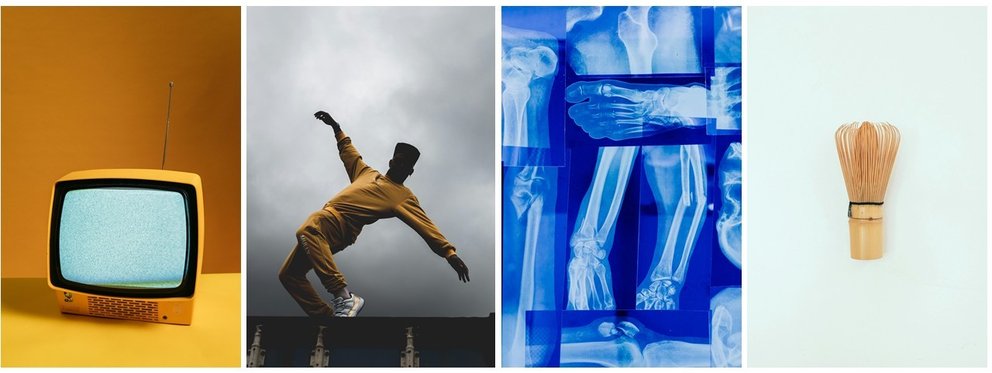
While the sensorium and sense perceptions have long been considered as bodily dispositions that are determined by physiological and neurological factors, a cultural studies approach to the study of the senses complements this perspective by centering attention on how sense-making takes place in a relational, embodied, performative, and co-constructed manner and appears in interaction between individuals as the collection of lived experiences, being shaped as they are by mutually perceived perceptions and performed practices. As Erica Fretwell asserts, therefore, the task in exploring the various dimensions of sensory perception and sense-making, e.g., in the study of the US, is to “[reconsider] the senses not simply as objects of study but as methodologies: as a means of navigating and investigating the cultural materials, affective forces, and epistemological paradigms through which humans and nonhumans continue to both emerge and engage each other“ (“Introduction: Common Senses and Critical Sensibilities” 2018, 3). The two-day, international conference “Making Sense of America” brings together Americanists in a collective attempt at understanding the United States in this very frame: multisensory, embodied, co-created, and affective.
Explore the full Call for Papers, program, and contact information using the menu links below.
Keynote Lecture by Erica Fretwell
Sense and Insensibility, ca1900 and 2000
This talk considers the sense-making that might derive, counterintuitively, from senselessness. The invention of general anesthetics in the mid-nineteenth century, which yielded the chemical control of unconsciousness, catalyzed a paradigm shift human ontology that, in the following decades and centuries we are still tarrying with: What is human life when consciousness (and with it, selfhood) is dead? This talk tracks that question across the literature of "unlived experience" that clusters around the turns of twentieth and the twenty-first century. Drawing on feminist and disability phenomenology, the history of science, and sense studies, I read Edith Wharton's fiction alongside Claudia Rankine and Ottessa Moshfegh to consider how the "oversleeper" -- unable to awaken but refusing to dream -- refigures insentience as a reprieve form the racialized and gendered demands of interiority. The counter-history of (Freudian) unconsciousness that general anesthetics offers, then, suggests that the flatlining of consciousness can function as a lifeline, a means for subjects to survive the normative fantasies that may not kill but form which recovery is not possible. At stake, then, in tracking the aesthetic life of senselessness is the pivotal role that insensibility plays in the intimate and embodied relations, performances, and practices that we otherwise call "sense-making."
Erica Fretwell is associate professor of English at the University at Albany, SUNY, where she teaches nineteenth- and twentieth-century U.S. literature, as well as affect theory, the history of science and medicine, and feminist and disability studies.
She is the author of Sensory Experiments: Psychophysics, Race, and the Aesthetics of Feeling (Duke, 2020), and her essays have appeared in the journals PMLA, American Literary History, and American Literature. She is currently writing a book on the literature of unlived experience, titled "The Art of Slight Living."
Making Sense of America--
Conversations on Matters and Methods
While the sensorium and sense perceptions have long been considered as bodily dispositions that are determined by physiological and neurological factors, a cultural studies approach to the study of the senses complements this perspective by centering attention on how sense-making takes place in a relational, embodied, performative, and co-constructed manner and appears in interaction between individuals as the collection of lived experiences, being shaped as they are by mutually perceived perceptions and performed practices. As Erica Fretwell asserts, therefore, the task in exploring the various dimensions of sensory perception and sense-making, e.g., in the study of the US, is to “[reconsider] the senses not simply as objects of study but as methodologies: as a means of navigating and investigating the cultural materials, affective forces, and epistemological paradigms through which humans and nonhumans continue to both emerge and engage each other“ (“Introduction: Common Senses and Critical Sensibilities” 2018, 3). The two-day, international conference “Making Sense of America” brings together Americanists in a collective attempt at understanding the United States in this very frame: multisensory, embodied, co-created, and affective.
The conference participants share their expertise on the United States from a “sense studies” perspective – a collective endeavor that entails both an invitation and a redirection: an invitation to explore the sensory dimensions of American life and culture as both matter and method and a redirection of the kinds of questions that sense studies scholars have been asking for some time to the fore of debates in American Studies. Understanding sense-making as a process of reciprocal investigations between various objects and methodologies – with a focus on the United States transnationally understood – the conference panels engage with the following questions:
- How do we convey not just what America means, but also how its many sites, sights, and sides feel, look, smell, and sound?
- How do sensory experiences and sensory histories materialize in the various objects of study that we rely on and employ for sense-making in our own work?
- What are potential remedies to the methodological perils that underpin “re-enactments” and “re-creations” of historically distant archival sources of sense data, sensing practices and sensory experiences that appear to be lost?
- Whose sense histories and sense orientations do scholars present in their research and what are the politics of revisiting these sensorial repositories?
- How can the presentation of the ephemeral, fleeting, and contingent produce meaning and significance again by revealing how the past felt, sounded, looked, or smelled to individuals and communities?
A headspace to both think about how senses circulate through the texts, archives, and cultural forms that we study and to explore new avenues of research that facilitate the study of the Treffpunkte between the abstract and the tangible, the far-off and the everyday, the self and the other, the archival and the experiential, and the perceived and the affective, possible topics include, but are not limited to:
- Senses of place, sensory environments, sense-scapes, e.g. soundscapes, smellscapes, tastescapes and/or sensory experience in specific regions or geographies, e.g., mountains, waterways, deserts, the atmosphere
- Senses of time, temporal reconfigurations of linear and progress-driven conceptions of time, e.g., deep time, queer temporalities
- Sensory histories and new models of conceptualizing sensory experience, e.g., against the “Great-Divide-Theory” and teleological narratives of modernity
- Individual and/or community-centered practices, rituals, routines, and performances of sense-making and sensations
- Forms of resistance against regulatory practices, power structures, and sense proscription, e.g., deodorization, sonic warfare, epidemic restrictions imposed on the body in the open
- Technologically-mediated sensations
- Single sense vs. inter-sensory and multi-sensory alignments and divergences against a “hierarchy of the senses” and, e.g., synesthesia
- The marketing, shopping, and selling of sensory goods, modes of production and consumption – e.g. the politics of food in cookbooks or intersectional (de-)coding of scents in perfume ads
- An invitation to consider the development of non-print-based and non-textualist methodologies and approaches to presenting sensory histories and experiences, e.g., creation of sonic archives
Coming soon....
Conference Proceedings
The conference proceedings will be published as an essay collection with a leading academic press.
Contact the conference organizers by sending an email to
- Mahshid Mayar, Ass.-Prof. Dr. [she / her] - mahshid.mayar@uibk.ac.at
- Philipp Leonhardt, MA [he / him] - philipp.leonhardt@uibk.ac.at